



Glendale Commercial Pigeon Control for Property Managers

City Wide Pest Control delivers commercial pigeon control in Glendale for offices, warehouses, retail centers and other busy properties.

Pigeon Control for Glendale Businesses

Pigeons on a commercial property can leave tenants and customers with a poor first impression. Droppings are acidic and wear on roofing, signs and walkways, while nests in HVAC equipment can interfere with airflow. Buildup at entrances and common areas also makes surfaces slippery and calls for careful, safe cleanup.
We are a family owned company with over 40 years of experience helping schools, government offices and property managers throughout the Valley. Our team handles commercial pigeon removal in Glendale from the first inspection through the final follow-up visit.
Pigeon droppings and nesting debris under rooftop solar panels
Years Serving Maricopa County
0 +

Noticing any of these signs? Don't wait.

Where Pigeons Settle on Commercial Buildings

Rooftop Units

Air handlers, ducts and other mechanical gear offer shelter for roosting and nesting. Nest debris can restrict airflow and strain the equipment.

Building Signs and Ledges

Sign cabinets, ledges and decorative trim give pigeons flat spots to perch by day and settle in at night.

Parking Garages

Covered levels of a garage give pigeons shelter all through the structure. Droppings land on vehicles and walkways and build up fast in enclosed spaces.

Docks, Awnings and Overhangs

Overhangs, awnings and covered dock bays shield pigeons from sun, wind and predators. Dumpsters and food scraps nearby often give the flock a steady meal.

Call (602) 944-0099 for a Glendale Assessment

Reach out to our team for a walkthrough of your property and an exclusion proposal. We are locally owned and operated, with over 40 years serving Arizona businesses.
Call: (602) 944-0099

Signs Pigeons Have Moved In

Look for these clues around your business or facility.

Droppings collecting on roofs, walkways, signs or building ledges

Nests showing up on rooftop units, under awnings, inside garages or along ledges

Tenants or staff mentioning the noise of roosting pigeons

Gutters, drains or vents blocked by nest debris

Guests commenting on droppings by entrances, patios or parking lots

Mites, flies or beetles turning up around nests and droppings

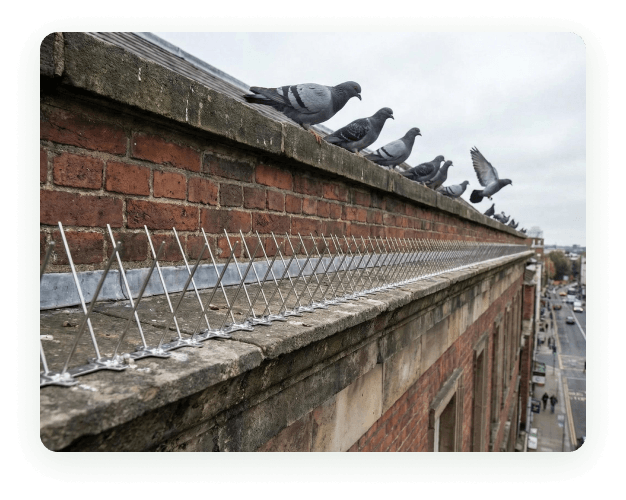
Pigeons roosting along a commercial building ledge fitted with bird spikes

What Pigeons Mean for Your Property

Droppings are more than a cosmetic issue. Once dry, they can release fine dust and spores when disturbed, which is a concern for staff and visitors who spend time nearby. Keeping roosts and nesting spots under control helps you show tenants and customers that the property is well looked after.
On the maintenance side, acidic droppings can etch concrete, eat away at metal roofing and flashing, and dull the paint on cars in parking areas. Nest material can clog drains and gum up HVAC equipment. At customer-facing sites, a clean entrance sets the tone before anyone walks in.

Speak to a real person, not a robo machine.

Pigeon Control for Glendale's Venues and Industry

The City of Glendale describes State Farm Stadium, Desert Diamond Arena and the Westgate Entertainment District as among the largest sports and entertainment districts in the country, and notes thousands of hotel rooms in the city. Hotels, restaurants and parking structures in areas like this give pigeons shelter and easy meals, so property managers there benefit from a clear plan.
The city also has over 100 manufacturers, so industrial pigeon control in Glendale often comes down to large rooftops, dock doors and warehouse eaves. Glendale Code Compliance’s pigeon brochure says a typical pigeon dispenses about 25 pounds of fecal matter per year, which adds up fast on a big roof. City Code Sec. 25-24(j) makes it unlawful to feed pigeons on public property, and Sec. 25-24(a) lists feeding pigeons among the nuisance conditions no one may allow on private or public property, so food control belongs in every plan.
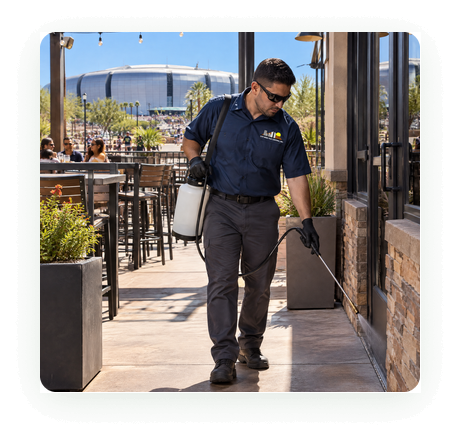
City Wide Pest Control technician servicing a restaurant patio near the stadium district in Glendale, AZ

How We Handle Pigeon Problems

Step 1
Property Assessment
First we inspect the building to find roosts, nests, flight paths and flock size. Findings are ranked by how much they affect your property and operations.
Step 2
Exclusion Installation
Using netting, spike strips and screening, we close off the ledges, frames and equipment that pigeons favor. Blocking access physically tends to give the longest-lasting results.
Step 3
Pigeon Deterrent Systems
For commercial bird control in Glendale where physical barriers are not practical, we fit deterrent systems that leave pigeons too uncomfortable to roost.
Step 4
Cleanup and Sanitization
We clear droppings and nesting debris from affected areas, which supports health compliance and brings customer-facing surfaces back to a clean look.
Step 5
Ongoing Monitoring
We return on a schedule to confirm exclusion work is holding and that pigeons have not moved to another part of the building.

Family owned since 1986.

Simple Steps for Property Managers

A few habits can keep pigeons from settling between visits.
City Wide Pest Control brand-green shield with checkmark prevention icon

Cover open HVAC areas and rooftop equipment with netting or screening

City Wide Pest Control brand-green shield with checkmark prevention icon

Remove food sources near dumpsters, docks and outdoor dining spaces

City Wide Pest Control brand-green shield with checkmark prevention icon

Close gaps in facades, parapets and decorative building details

City Wide Pest Control brand-green shield with checkmark prevention icon

Keep gutters and drains clear so birds find no water

City Wide Pest Control brand-green shield with checkmark prevention icon

Act early: feral pigeons lay eggs six times a year, so flocks grow fast

City Wide Pest Control brand-green shield with checkmark prevention icon

Check exclusion systems on a regular schedule to keep them working

Why Choose City Wide Pest Control

Family owned since 1986

over 40 years protecting West Valley desert communities

Same-day service

fast response when pests disrupt your business

State-licensed staff

technicians AND office personnel licensed by the Arizona Department of Agriculture

Government-trusted

contracts with State, County, and City buildings, along with several school districts

Green, kid friendly, pet friendly

IPM approach suited to desert environments

Real people

call (602) 944-0099, talk to an account manager, not a robo machine

City Wide Pest Control technician reviewing a commercial service log with a Phoenix facility manager

Let's Solve Your Pest Problem the Right Way

Whether you manage one building or several, we can map out a plan that fits your property. Phone (602) 944-0099 Monday to Saturday, 8 to 5, and ask about same-day service.

Frequently Asked Questions

Do you cover warehouses and industrial sites?
Yes. Our warehouse bird control in Glendale covers rooftops, dock doors and open bays. The same inspect, exclude and follow up approach applies at manufacturing sites, and we handle industrial bird control in Glendale under a service agreement, with technicians and office staff licensed by the Arizona Department of Agriculture, Pest Management Division.
On public property, yes. Glendale City Code Sec. 25-24(j), set out in Ordinance O26-15 adopted March 24, 2026, makes it unlawful to feed pigeons or peafowl there, a misdemeanor with a civil sanction. Sec. 25-24(a) also lists feeding pigeons among the nuisance conditions no one may allow on private or public property.
Yes. We offer commercial bird removal in Glendale for hotels, restaurants and parking structures in the Westgate Entertainment District and near State Farm Stadium at 1 Cardinals Drive. Because food and shelter keep birds returning, we pair removal with exclusion work and simple food-control advice for your staff. Call (602) 944-0099 Monday to Saturday, 8 to 5.
Pigeons return to places that offer shelter, food and a nest site they already know. Cleaning alone rarely settles it, because the same ledges and equipment still look inviting. Blocking access and controlling food change the property so there is less reason to return, and follow-up visits confirm the flock has not simply moved.
Glendale Code Compliance’s pigeon brochure says feral pigeons lay eggs six times a year and breed faster near a major food source. Eggs usually hatch in about 18 days, so a nest left alone can add young birds within weeks. Cutting off food and nest sites early keeps a small group from growing.
Pigeons typically settle in at dusk on ledges, rooftop units and covered areas, then stay through the night. Their nests are loose piles of twigs and debris, which can block gutters, drains and vents. Checking those spots is part of every commercial inspection we do, so problems are found before they spread.

Commercial Pigeon Control Near Glendale

Browse our Glendale pest control hub, the main Commercial Pigeon Control page and the nearby cities we serve.