
Tiny ants in the kitchen almost always turn out to be one of three species: odorous house ants, pavement ants, or pharaoh ants. Each nests differently and reacts differently to sprays, so identifying which one is on your counters is the real first step toward Residential Ant Control that actually works.
By City Wide Pest Team
What Kind of Tiny Ants Are in My Kitchen in Arizona?
Phoenix homeowners see three tiny ant species indoors far more than any others: odorous house ants, pavement ants, and pharaoh ants. All three measure between 1/16 inch and 1/8 inch, dark enough to blend into grout lines, and fast enough to seem like they appeared overnight on a clean counter. In over 40 years treating Maricopa County homes, City Wide Pest Control finds most kitchen ant calls narrow down to one of these three once someone gets a close look. Getting the species right matters: a spray that scatters a pavement ant trail can split a pharaoh ant colony into a dozen smaller ones, turning a minor annoyance into a much longer job.
Odorous House Ants, Pavement Ants, and Pharaoh Ants: How to Tell Them Apart
Here is how the three species compare at a glance.
Odorous House Ants: The Ones That Smell Like Coconut
Odorous house ants are dark brown to black, about 1/8 inch, and travel in loose, wandering trails rather than tight lines. Crush one and it gives off a smell many describe as rotten coconut, a quick field test that separates them from the other two on the spot. They nest almost anywhere with a moisture source: wall voids near plumbing, potted plants, mulch beds against the foundation, even a leaky dishwasher line. In Phoenix, they show up most often after monsoon storms drive moisture-seeking colonies indoors.
Pavement Ants
Pavement ants are similarly dark and similarly sized, but their bodies carry fine parallel grooves on the head and thorax, visible with a hand lens. True to the name, they nest under slabs, sidewalks, and driveways, often pushing small mounds of loose soil up through expansion joints. Pavement ants eat almost anything, sugar, grease, pet food, pulling them from an outdoor nest through a foundation crack and onto a kitchen counter.
Pharaoh Ants
Pharaoh ants are the smallest of the three, closer to 1/16 inch, and pale yellow to light amber rather than dark brown or black. Their nests sit deep inside wall voids, behind baseboards, or insulation, often far from any visible entry point, which is why they are the species most likely to make a homeowner feel infested even when only a few dozen ants are visible at once.
Why Do Tiny Ants in the Kitchen Suddenly Appear?
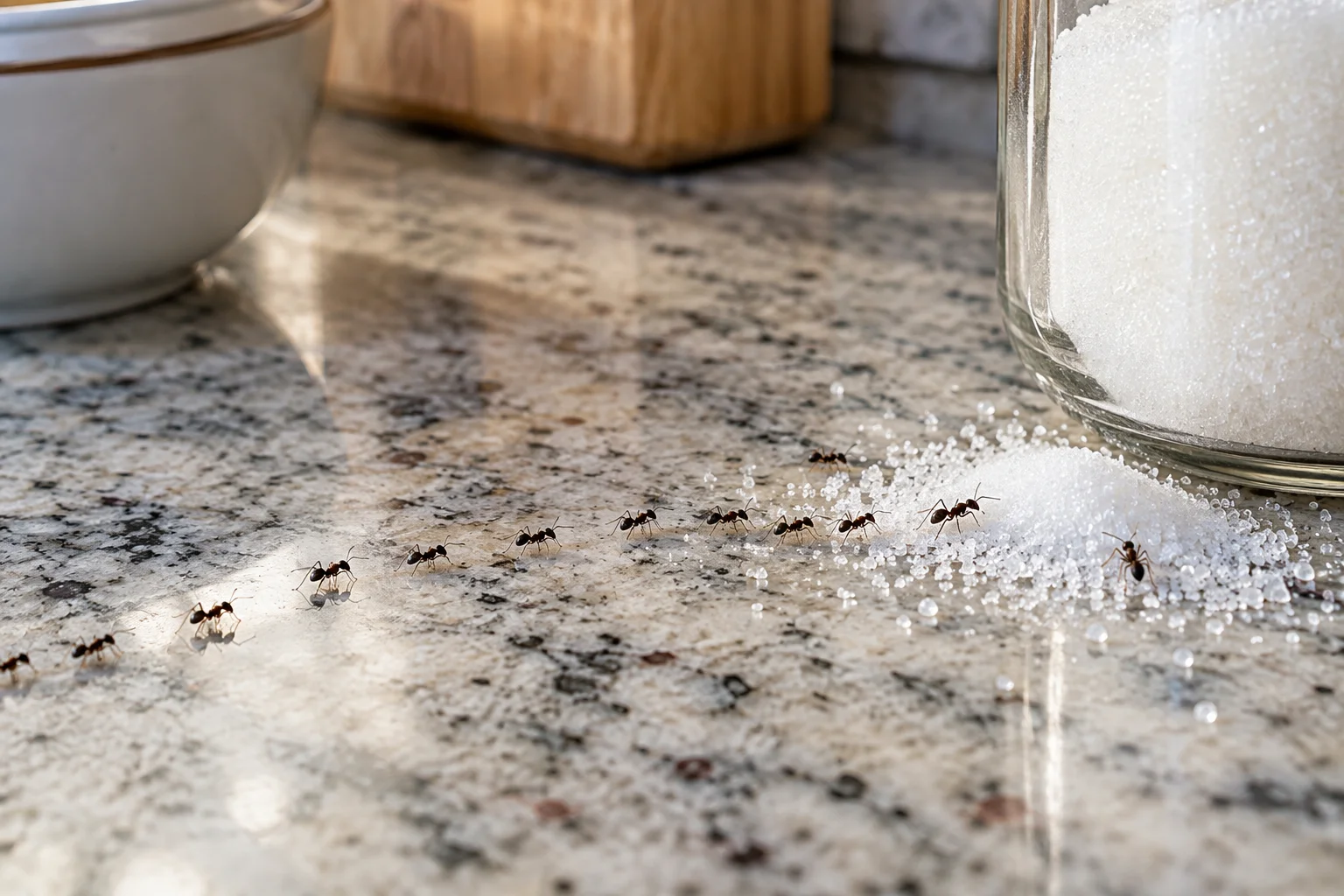
A kitchen usually stays ant-free for months, then trails show up within a day or two of nothing changing on the homeowner's end. The trigger is almost always outside: a scout ant from an existing colony near the foundation finds a food or water source indoors, most often a sugar spill, a pet food bowl, or condensation under a sink, and lays a pheromone trail back to the nest. Within hours, dozens of workers are following that same trail. Arizona's summer heat and monsoon humidity both push colonies to search harder for water, which is why kitchen ant calls to City Wide climb every June through September.
If tiny ants in the kitchen keep coming back within days of wiping the counters down, the pheromone trail is still there. Soap and water breaks it down; a dry paper towel or a spray-and-wipe often does not, so the next scout picks the scent back up and the trail reopens along the same path.
Where Are the Ants Coming From, and Where Is the Nest Hiding?
Finding the nest matters more than finding the trail, because killing visible ants on the counter does nothing to the colony producing more of them. Odorous house ants nest close to moisture, so check under sinks, around water heaters, inside potted plants, and in mulch or ground cover touching the exterior wall nearest the kitchen. Pavement ants nest outdoors under slabs and walkways and enter through foundation cracks, expansion joints, or gaps around utility lines. Pharaoh ants are hardest to locate: their nests sit inside wall voids or behind cabinetry, entering through the smallest cracks around baseboards, outlet covers, and plumbing penetrations rather than an obvious gap.
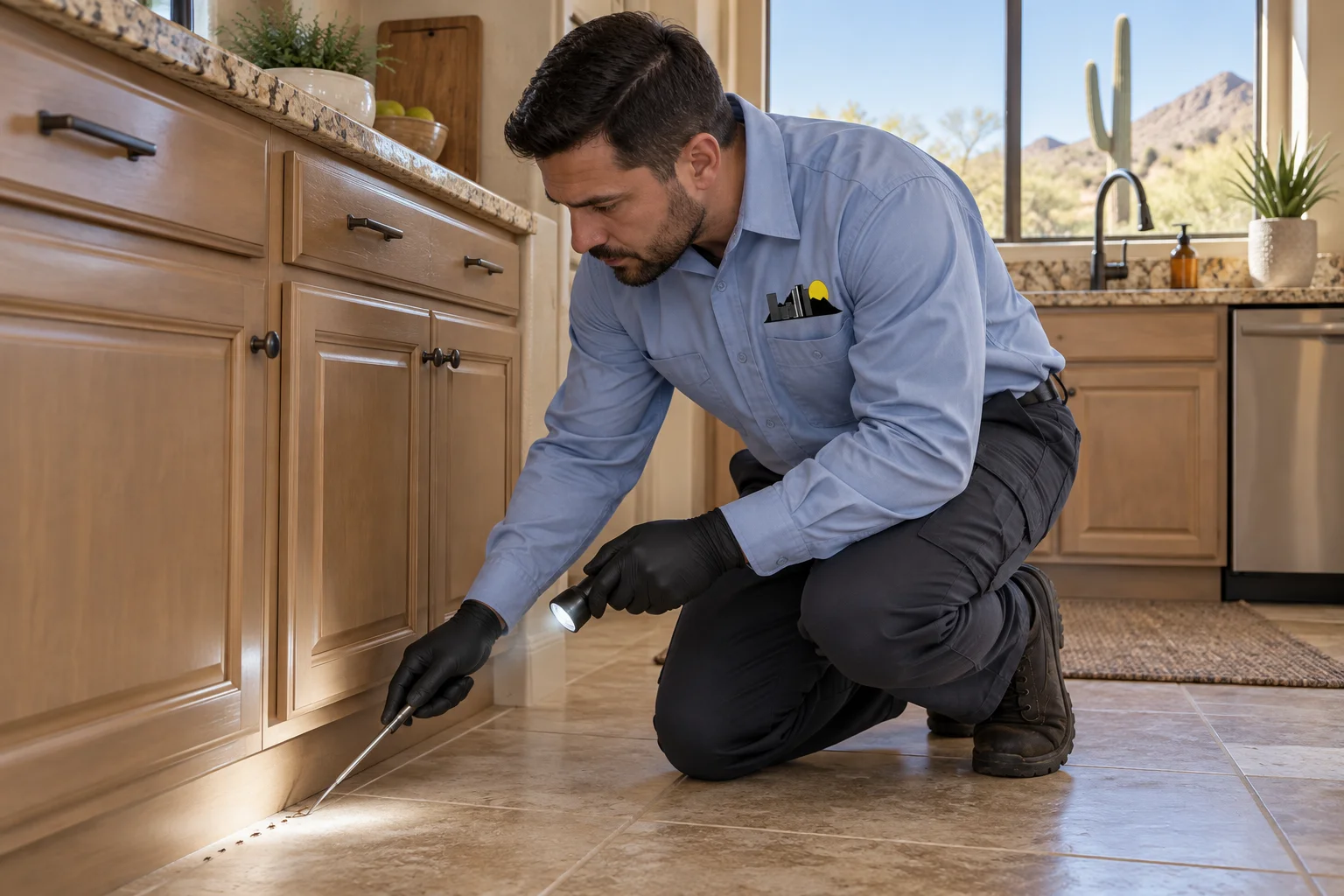
Trace the trail backward from the food source with a flashlight, especially at night, when many ants forage more actively, and look for where it disappears into a wall, floor gap, or cabinet seam. That entry point, not the counter, is where treatment needs to focus.
How Do You Get Rid of Tiny Ants in the Kitchen for Good
A few practical steps handle most kitchen ant trails without a professional visit, but persistent activity calls for something stronger: remove what's drawing ants in, break the trail, then address the colony itself.
Start with the kitchen: store cereal, sugar, and pet food in sealed containers, wipe up crumbs and spills the same day, and fix any dripping faucet or slow leak under the sink, since both odorous house ants and pharaoh ants are drawn to a reliable water source as much as food. Clean visible trails with soap and warm water rather than a dry wipe or glass cleaner. A diluted lemon juice solution works as a natural wipe-down for counters and baseboards because the acidity breaks down the pheromone scent ants use to mark their path.
For the colony itself, slow-acting gel bait placed along the trail, not directly on it, lets foraging ants carry the bait back to the nest, the only method that reaches ants that never leave the wall void. Avoid spraying visible ants directly, especially with pharaoh ants: contact sprays panic the colony into budding, splitting one nest into several scattered through the walls. When a trail keeps returning after cleaning, bait, and sealing entry points, that usually means the nest is established enough that Residential General Pest Control treatment focused on the colony, not just the visible trail, is the more reliable path.
How Do You Keep Tiny Ants From Coming Back to the Kitchen?
Prevention holds up better than repeated cleanups once a colony has been dealt with. Seal cracks and crevices around windows, baseboards, and utility penetrations with caulk, since these gaps are how most tiny ant species move from yard to home. Trim any plants, mulch, or ground cover so nothing touches the house directly, which removes the moisture bridge odorous house ants rely on. Make sure counters, floors, and pet food areas stay clean, store dry goods in airtight containers, and address any standing water or drainage issue near the foundation. A property that removes food, water, and entry points at once gives ants far fewer reasons to return, and Phoenix homes on a routine pest control schedule see far fewer repeat trails than those treating each sighting as a one-off.
Frequently Asked Questions
Are tiny ants in the kitchen dangerous, or just a nuisance?
Odorous house ants, pavement ants, and pharaoh ants are not medically dangerous the way a bark scorpion sting or an Africanized bee attack can be, and they do not bite or sting. The real risk is contamination: ants foraging through trash, drains, and outdoor debris before walking across food prep surfaces and open food containers. A heavy infestation, especially pharaoh ants nesting inside walls, can also point to an underlying moisture problem worth checking.
Do tiny ants in the kitchen mean the house is infested?
Not necessarily. A handful of ants following one trail to a sugar spill is common and usually clears up once the food source and trail are removed. A larger, ongoing infestation is more likely when trails appear in multiple rooms at once, when ants show up daily regardless of cleaning, or when the species is pharaoh ants, which nest deep inside walls and are difficult to fully clear without locating the colony.
What is the fastest way to kill tiny ants without hiring an exterminator?
Wipe visible trails with soap and water to remove the pheromone scent, then place slow-acting ant bait stations along the trail rather than spraying ants directly. Baits typically show a noticeable drop in activity within a few days as foraging ants carry the bait back to the nest. Sealing the entry point once the trail is gone helps keep the fix in place.
When should I call a pest control company for ants in Arizona?
Call when the same trail returns within days of cleaning and baiting, when ants are visible in more than one part of the house, or when the species turns out to be pharaoh ants, since sprays can split their colonies instead of eliminating them. A same-owner, family-owned company that has worked Maricopa County homes since 1986 can usually identify the species and likely nest location during an inspection rather than guessing at another round of store-bought bait.
Get Your Kitchen Ants Identified by a Local Phoenix Team
If tiny ants in the kitchen keep returning despite cleaning and baiting, a same-owner, family-owned team that has worked Maricopa County kitchens for over 40 years can help pin down the species and the nest location. Contact Us to schedule an inspection.