
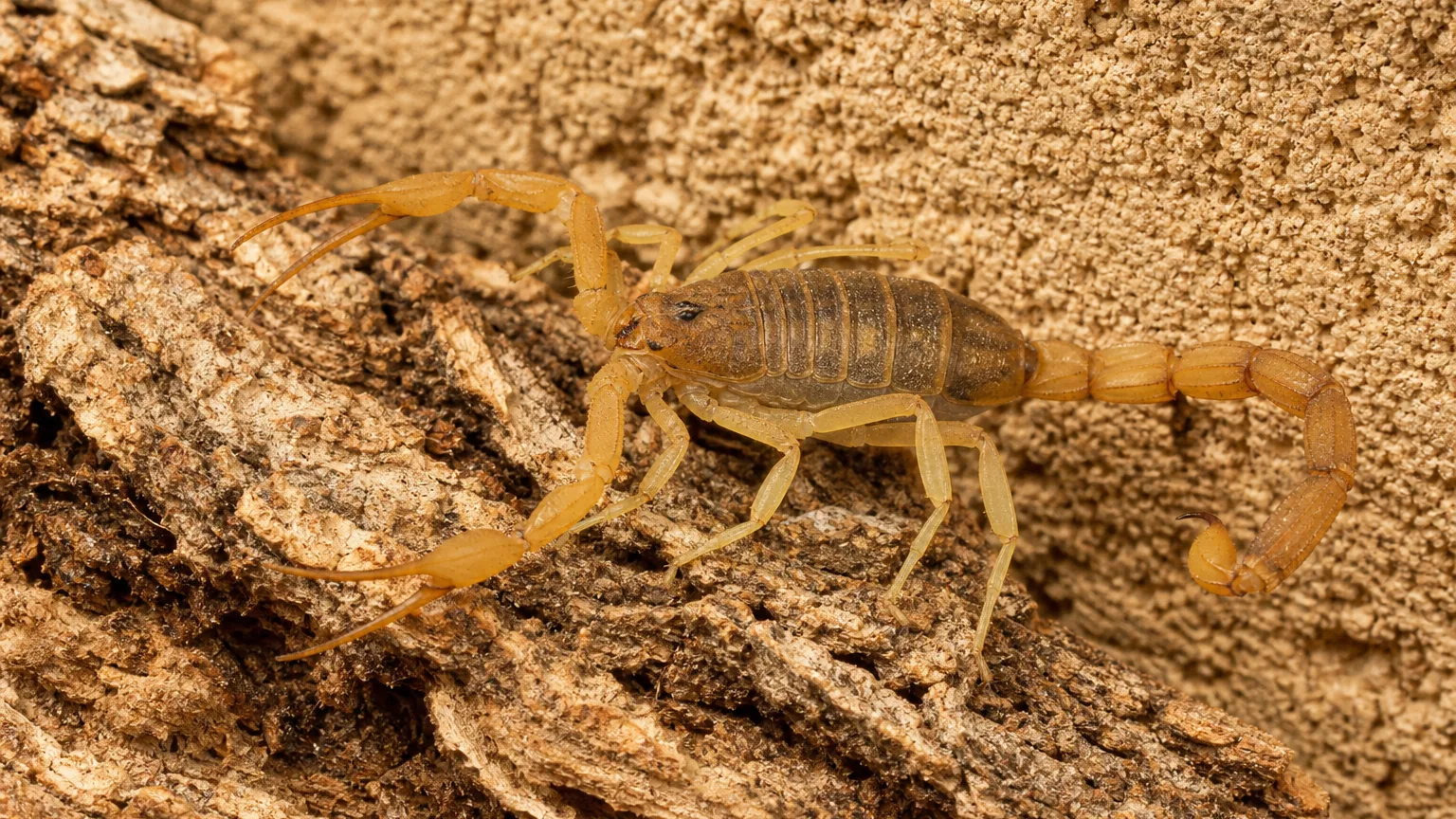
The Arizona bark scorpion (Centruroides sculpturatus) is a slender, tan scorpion about two to three inches long, and it is the only species in the state whose sting is medically significant enough to warrant scorpion control. It is also the only Arizona scorpion that climbs walls and ceilings, and it hides under bark, in block walls, and inside homes.
City Wide Pest Control has been locally owned and family operated in Phoenix since 1986, and in over 40 years of treating Valley homes, our technicians see more bark scorpions than almost any other pest in Maricopa County.
What Makes This Bark Scorpion Different From Every Other Arizona Scorpion
Arizona is home to more than 30 scorpion species, but only one of them matters for pest control: Centruroides sculpturatus, the Arizona bark scorpion. At two to three inches long, it is smaller and noticeably more delicate looking than most of the Sonoran Desert's other scorpions. Its body and legs run tan to sandy yellow, almost translucent in bright light, with none of the dark banding some other species carry.
The field marks that matter most are the pincers and the tail. Bark scorpions have slender pincers, thin and narrow rather than the thick, muscular claws of a ground dwelling scorpion. Their tail is just as thin, and at rest it is usually carried curled off to one side rather than raised straight up. Look closely near the stinger and you may spot the subaculear tooth, a tiny bump that other Arizona scorpions do not have.
One trait sets the bark scorpion apart from every other scorpion in the state: it is the only species here that can climb walls and ceilings. Its cousins stay on the ground. A bark scorpion can grip stucco, block, and even glass well enough to walk across a ceiling upside down, which is exactly how it ends up indoors.
Bark scorpions are nocturnal hunters that spend the day hidden and come out after dark to feed on crickets, roaches, and other small insects. Peak activity comes during the hottest stretch of summer, typically July and August, and picks up again after monsoon rains bring out the insects they eat. Females give birth to live young rather than laying eggs, and the newborn scorplings ride on the mother's back for their first one to two weeks.
Bark Scorpion vs. Striped Tail Scorpion: How to Tell Them Apart
The bark scorpion gets confused with Arizona's other common backyard scorpion, the striped tail scorpion, more than any other species. They share a similar tan color palette and roughly the same size, but they are built differently and carry very different risk levels.
| Field Mark | Bark Scorpion | Striped Tail Scorpion |
|---|---|---|
| Color | Tan to sandy yellow, no dark stripes | Tan to brown with dark stripes down the back |
| Pincers | Slender and thin | Thick, chunky, almost lobster claw shaped |
| Tail | Thin, often carried curled to the side | Thicker and stockier |
| Climbing ability | Climbs walls and ceilings with ease | Stays at ground level, does not climb |
| Typical hiding spots | Tree bark, block walls, expansion joints, inside homes | Under rocks, stepping stones, potted plants, woodpiles |
| Sting risk | The only medically significant scorpion in Arizona | Painful like a bee sting, not medically significant |
If you are looking at a scorpion with thick, chunky pincers, you are almost certainly looking at a striped tail, not a bark scorpion. That distinction matters, because it changes what kind of response actually makes sense. Both scorpions are common enough in the Valley that finding a striped tail on your patio is not automatically a reason to worry. The bark scorpion is the one to take seriously, especially anywhere you have found one climbing, since that climbing behavior is what gets them onto beds, into shoes, and behind wall outlets.
Do a UV Flashlight Check to Find What Is Actually in Your Yard
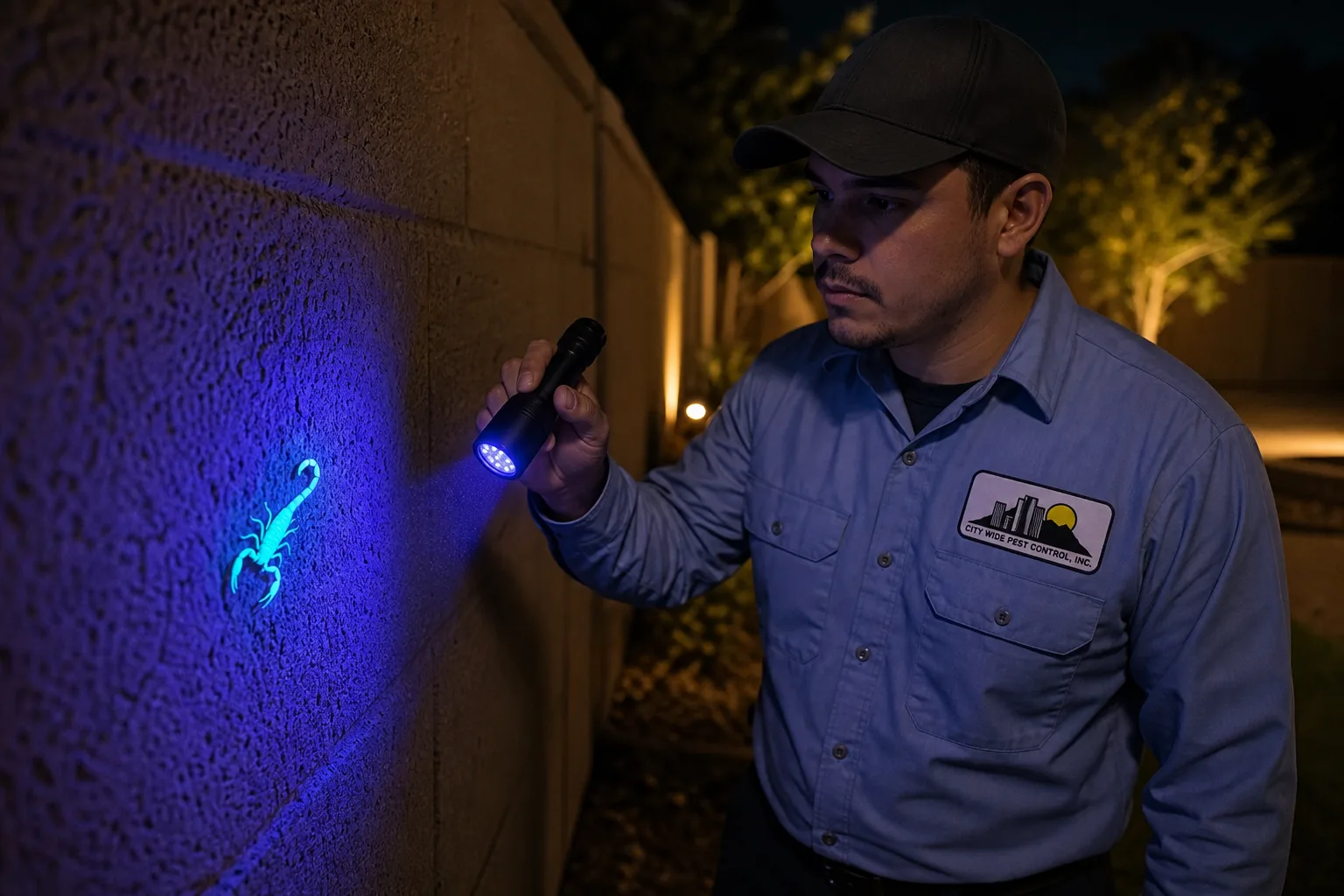
Every Arizona scorpion glows blue green under a UV black light, so a flashlight alone will not tell you which species you have found. What it will do is help you actually locate a scorpion in the dark, on a patio, along a block wall, or under a bush, so you can get close enough for a real identification.
Wait for full dark
Scorpions fluoresce best after sunset. Give it at least an hour past dusk before you start.
Sweep block walls and tree bark first
Move a UV flashlight slowly along block walls, palm and citrus trunks, and any exposed tree bark. A glowing scorpion shows up as a bright blue green outline.
Switch to a regular flashlight to identify it
Once you spot the glow, use a normal light to check the pincers and tail against the field marks above before deciding what you are dealing with.
Is a Bark Scorpion Sting Actually Dangerous?
The bark scorpion is the only scorpion in Arizona capable of a medically significant sting, and that is the reason the state treats scorpion stings as a real medical event instead of a nuisance bite. That said, the risk is smaller than it sounds for most healthy adults.
The bottom line: More than 95 percent of bark scorpion stings cause only pain, swelling, and localized numbness that resolves on its own, according to the University of Arizona Health Sciences. Fatalities in healthy adults are exceedingly rare. The real concern is young children and elderly family members, who can have a much stronger reaction to the same sting.
A sting typically causes sharp, burning pain at the site, along with tingling or numbness that can spread. In a small child or an older adult, symptoms can escalate further, including trouble with coordination, blurred vision, or breathing difficulty. Any of those symptoms in a child, an older adult, or anyone with a known allergic reaction is a reason to call the Arizona Poison and Drug Information Center at 1-800-222-1222 right away. The center fields thousands of scorpion sting calls every year and can walk you through exactly what to watch for.
For a healthy adult with a typical sting, pain relief, ice, and keeping the area elevated are usually enough while symptoms fade over a day or two. This is not a reason to panic. It is a reason to take the species seriously and keep it out of the house in the first place.
Not Sure What You Found in the Yard?
City Wide can identify what is actually on your property and treat for the real thing, not a guess. No pricing surprises, no high pressure sales.
Where Bark Scorpions Hide Around Phoenix Properties
Bark scorpions got their name for a reason. Their first choice of daytime shelter is loose or peeling tree bark on citrus and palm trunks, where the texture holds moisture and hides them from the sun and from predators. From there, they move onto block walls, whose hollow cores and rough mortar joints give them the same dark, cool conditions.
Around a typical Phoenix or Valley property, the most common hiding spots are:
- Block wall fences and hollow block construction, where scorpions travel through the cores between blocks
- Citrus and palm trees, tucked under loose bark or in dead frond bases
- Expansion joints and concrete gaps, especially where a patio or driveway meets the house
- Landscaping rock and mulch beds pushed up against the foundation
- Weep holes, door thresholds, and window frames, the small gaps a bark scorpion can flatten its body to squeeze through
Because a bark scorpion can climb, none of this stays confined to the yard, which is why our residential pest control approach treats the whole perimeter, not just the areas you can see. The same scorpion working its way up a block wall at dusk can be on your ceiling by midnight.
About City Wide Pest Control
City Wide Pest Control, Inc. has been locally owned and operated in Phoenix since 1986, under the same family ownership the whole way through. The company holds Arizona pest control license #2317 and serves all of Maricopa County plus statewide Arizona. In over 40 years of treating Valley homes and businesses, our technicians, including Mike and Steven, have handled more scorpion calls than almost any other pest.
This guide was written and reviewed by the City Wide Pest Team using the same field identification standards our technicians use on every scorpion inspection, cross checked against published guidance from the University of Arizona Health Sciences and the Arizona Poison and Drug Information Center. Last updated August 2026.
Frequently Asked Questions About Arizona Bark Scorpions
What do bark scorpions look like?
Bark scorpions are slender, tan to sandy yellow scorpions about two to three inches long, with thin, delicate pincers and a thin tail that is often carried curled to the side. They lack the dark stripes and chunky pincers of Arizona's other common scorpion, the striped tail.
Are bark scorpions dangerous?
Bark scorpions are the only medically significant scorpion species in Arizona, meaning their sting can cause a real reaction. Most healthy adults experience pain, swelling, and numbness that fades within a day or two. Young children and elderly adults are at higher risk and should be seen promptly if stung.
Do bark scorpions climb walls?
Yes. The bark scorpion is the only scorpion species in Arizona that regularly climbs walls and ceilings, which is exactly how it ends up indoors overnight. Other Arizona scorpion species, including the striped tail, stay at ground level and do not climb.
Do bark scorpions glow under UV light?
Yes, along with every other Arizona scorpion species. A UV flashlight will help you spot a scorpion in the dark, but you still need to check its pincers and tail in regular light to confirm the species.
What should I do if I get stung by a bark scorpion?
Wash the site, apply ice, and watch for spreading numbness, trouble breathing, or muscle twitching, especially in a child or older adult. Call the Arizona Poison and Drug Information Center at 1-800-222-1222 for guidance, or seek medical care if symptoms escalate.
Ready to Stop Guessing About Scorpions?
City Wide Pest Control has treated Valley homes for bark scorpions since 1986. As a locally owned, family operated Arizona company (license #2317), we know exactly where they hide on Phoenix properties and how to keep them out.