




Ant Control Help for Queen Creek Homes

For over 40 years, our team has handled ant control in Queen Creek and across the wider East Valley.

Residential Ant Solutions for Queen Creek Homeowners

Ants are some of the most stubborn visitors in Arizona homes. They line up across kitchen counters, crowd pet food dishes, and build big colonies under yards and slabs. Warm weather keeps them busy for most of the year, and monsoon storms send colonies roaming for water and food. Households that need ant pest control in Queen Creek often face more than one species, from stinging fire ants to wood-tunneling carpenter ants.
We are family owned, locally owned and operated, and based in Phoenix, with the same family running things since 1986. As an ant exterminator in Queen Creek, our licensed team works out which species you have, finds the nest, and treats the whole colony instead of just the trail you can see. Residential service never requires a contract.
City Wide Pest Control technician inspecting a garage door seal for pest entry at a Queen Creek, AZ home
Years Serving Maricopa County
0 +

Noticing any of these signs? Don't wait.

Clues Ants Have Settled In

Here are the common clues that a colony is close by.

Lines of ants running along baseboards, counters, windowsills, or bathroom tile

Winged ants flying out of cracks, which often means an established colony is ready to spread

Fire ant mounds popping up in lawns and beds after monsoon storms

Sawdust-like piles of frass below door frames, window trim, or other wood

The same spot keeps drawing ants no matter how often you wipe it down

Ants gathering at pet dishes, pantry shelves, or sticky spots on the counter

Seeing any of this at home? Dial (602) 944-0099 and we will arrange ant removal in Queen Creek.
City Wide Pest Control technician reviewing a residential pest control plan with a Phoenix homeowner

Why Treating the Whole Colony Works

Most ants are simply annoying, but a few cause real trouble. Fire ants sting, leaving welts that can be hard on kids and pets playing outside. Carpenter ants hollow out damp or damaged wood, which can weaken frames over time. Even ordinary house ants spread across food and surfaces while they search for a meal.
Desert heat pushes ants toward your kitchen and bathrooms. In summer and during monsoon season, they look for moisture and food indoors. One colony can hold tens of thousands of ants, and many species spread out with satellite nests around a property. Spraying the ants you see does little, since the queen stays underground and keeps producing more workers.

How We Treat Ants

Step 1
Inspection and Species Identification
Every species calls for its own plan. Technicians licensed by the Arizona Department of Agriculture identify the ants, find the nests, and trace their trails first.
Step 2
Targeted Colony Elimination
Professional baits and treatments carry the active ingredient back to the queen and the rest of the colony, rather than only the workers on the surface.
Step 3
Perimeter Treatment
Around the foundation and likely entry points, we treat the paths ants travel so a barrier stops them before they get inside.
Step 4
Nest Treatment
Our fire ant control in Queen Creek goes straight to the mound, and we treat carpenter ant galleries at the source too.
Step 5
Prevention and Monitoring
Your technician shares tips for removing what attracts ants and adjusts the plan as activity changes over time.

Common Ants in Arizona Yards and Homes

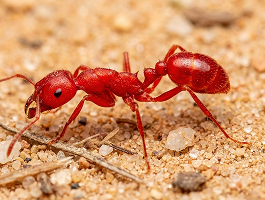
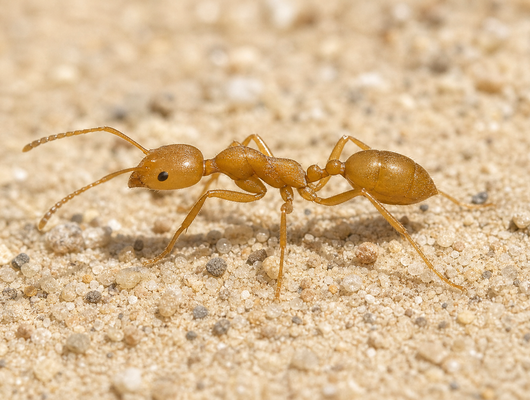
Close-up of a southern fire ant on desert sand
Southern Fire Ant
Solenopsis xyloni
Small and reddish brown, about 1/8 to 1/4 inch long. Piles up dirt mounds in lawns, sidewalk cracks, and planting beds, often after monsoon rain. The sting burns and can leave white pustules. Colonies react fast if a mound is disturbed.
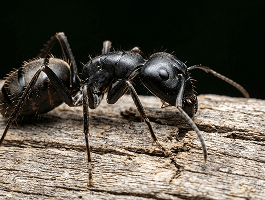
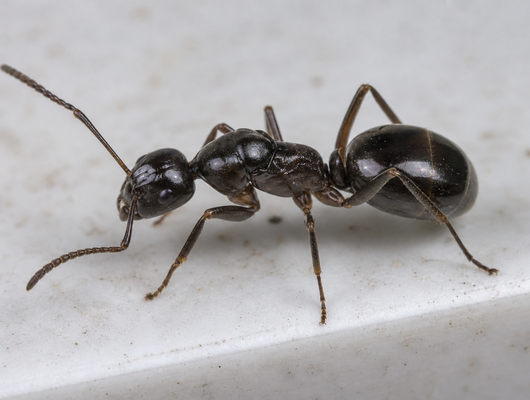
Close-up of a carpenter ant on a weathered log
Carpenter Ant
Camponotus spp.
Black to dark brown and roughly 1/4 to 1/2 inch long, the biggest ants most homeowners ever see indoors. They chew tunnels into damp or damaged wood for nesting, but they do not eat it. Look for small piles of wood shavings under the opening, often near door frames, window frames, or leak-damaged boards.
High noon ant (Forelius mccooki), a small pale brown desert ant
Forelius Ant
Forelius mccooki
Tiny and light brown, only about 1/16 inch. A very common desert ant in Arizona that sends long trails into kitchens and bathrooms. Not dangerous, but stubborn and tough to clear up without professional treatment.
Odorous house ant (Tapinoma sessile), small dark brown ant with no visible waist node
Odorous House Ant
Tapinoma sessile
Dark brown to black and around 1/8 inch. Crushing one releases a smell like rotting coconut. Nests inside wall voids, beneath slabs, and in landscaping, with big colonies and several queens that make them hard to wipe out.

Family owned since 1986. No contracts required.

Ants and Irrigated Yards in Queen Creek

Queen Creek grew out of farms in an area once called Rittenhouse, and citrus, cotton, pecans, vegetables and other crops are still grown in the valley below the San Tan Mountains. Water shapes many yards here: the Town of Queen Creek Water Division flood irrigates about 500 residential properties year-round, delivering water twice monthly in summer and once monthly in winter into bermed yards. Ants follow moisture, so we check damp, irrigated landscaping when we trace nests. The town asks residents to check for gopher holes before flood irrigation, and that same walk is a good time to spot ant mounds.
About 91 percent of occupied homes here are owner-occupied (18,788 of 20,677), and another 1,889 units are renter-occupied, so we explain every plan plainly to owners and renters alike. If your dog is a regular at Founders’ Park Dog Park on Ellsworth Road, with its four separate grass play areas, ask about our kid and pet friendly treatment options.
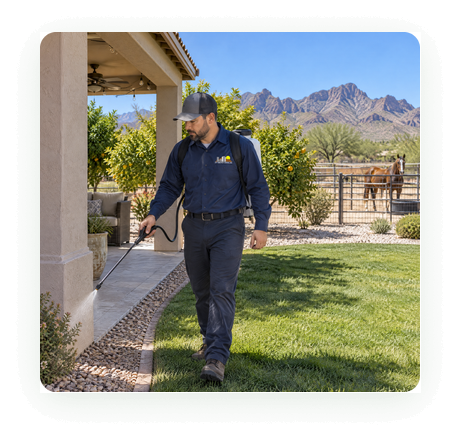
City Wide Pest Control technician treating a large backyard at a ranch-style home in Queen Creek, AZ

Simple Habits That Keep Ants Out

A few easy habits cut down on ants between professional visits.
City Wide Pest Control brand-green shield with checkmark prevention icon

Wipe down counters and keep food in sealed containers

City Wide Pest Control brand-green shield with checkmark prevention icon

Repair dripping faucets, pipes, and irrigation lines, because ants head straight for moisture

City Wide Pest Control brand-green shield with checkmark prevention icon

Caulk small cracks near doors, windows, pipes, and the base of the house

City Wide Pest Control brand-green shield with checkmark prevention icon

Cut back shrubs and branches that touch the house

City Wide Pest Control brand-green shield with checkmark prevention icon

Pick up pet dishes between meals and wipe up spills right away

City Wide Pest Control brand-green shield with checkmark prevention icon

Store firewood and yard clippings a good distance from the house

Why Choose City Wide Pest Control

Family owned since 1986

over 40 years protecting East Valley desert communities

No contracts

for residential, stay because it works

State-licensed staff

technicians AND office personnel licensed by the Arizona Department of Agriculture

Government-trusted

contracts with State, County, and City buildings, along with several school districts

Green, kid friendly, pet friendly

IPM approach suited to desert environments

Real people

call (602) 944-0099, talk to an account manager, not a robo machine

City Wide Pest Control technician showing a Phoenix family where he will treat their backyard

Let's Solve Your Pest Problem the Right Way

Skip the hardware-store sprays that only reach the ants you can see. Reach out to City Wide Pest Control at (602) 944-0099 and we will deal with the whole colony. Residential service means no contracts and no pressure, and our family has looked after Arizona homes since 1986. Same-day service is available, Monday to Saturday, 8 to 5.

Frequently Asked Questions

Do flood irrigation days bring more ants into Queen Creek yards?
Ants head for moisture, so you may see more activity near the damp edges of a bermed yard after a delivery. The Town of Queen Creek Water Division delivers flood irrigation twice monthly in summer and once monthly in winter. If trails keep showing up near the house, we find the nest and treat the colony.
The town tells residents to check for gopher holes, because water escaping through them can flood areas that were not meant to be watered. While you walk the yard, look for ant mounds or fresh dirt piles too. If you find fire ant mounds, call (602) 944-0099 and we will treat them at the source.
Yes. We have kid and pet friendly treatment options and use Integrated Pest Management to match the approach to the species and the yard. Tell your technician if your dog is a regular at Founders’ Park Dog Park or just loves the backyard, and we will plan the treatment around your pets.
No. Residential service does not require a contract, whether you own or rent. About 91 percent of occupied homes in town are owner-occupied, and we treat owners and renters the same way, with a 21-day warranty on monthly service. Commercial accounts do sign service agreements.
Wiping up trails and spraying what you see rarely ends the problem, because the queen and colony stay hidden. Start by sealing food, fixing leaks and clearing spills, then call us. Our licensed technicians identify the species, find the nest and use baits and treatments that reach the colony.
Ants stay active most of the year in Arizona, so there is rarely a true off season. Activity often climbs in hot summer weather and during monsoon season, when colonies look for water and food, including inside homes. If you see trails any month, call (602) 944-0099 (Monday to Saturday, 8 to 5) and ask about same-day service.

Ant Control Near Queen Creek

Explore the Queen Creek hub, our main Ant Control page, and the nearby cities we serve across the East Valley.