




Peoria Scorpion Control, Out Toward Lake Pleasant

A scorpion exterminator in Peoria with over 40 years of local experience behind every visit.

Residential Scorpion Service for Peoria Homes and Yards

Scorpion control in Peoria begins with understanding the Arizona bark scorpion. It is a small, pale, nocturnal arachnid found throughout Maricopa County, and it is well suited to life beside people. It slips through narrow gaps, climbs rough walls, and settles into quiet, sheltered spots. Because its sting is painful, households with young children and pets understandably want the problem handled carefully and thoroughly.
Family owned since 1986 and based in Phoenix, City Wide Pest Control knows the pest pressures Valley homes are up against. We provide scorpion pest control in Peoria with straightforward, no-contract residential service, backed by licensed technicians.
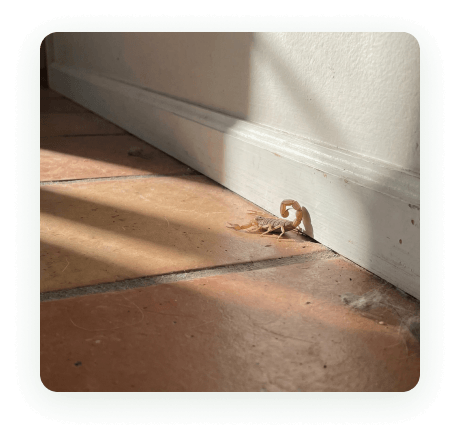
A scorpion on the tile floor along the baseboard of a Phoenix home
Years Serving Maricopa County
0 +

Noticing any of these signs? Don't wait.

Signs Scorpions Are Nearby

These clues around your home suggest scorpions are active nearby.

Scorpions turning up indoors, often in bathrooms, closets, or near outside doors

A scorpion tucked inside a shoe, bed linens, or dropped clothes

Plenty of crickets or roaches nearby, since scorpions hunt where the food is

Block walls with open caps close by, a favorite bark scorpion hideout

Mulch, decorative rock, or clutter stacked along the foundation

If any of this sounds familiar, call (602) 944-0099 and we will talk through scorpion removal in Peoria.
Children running through a sprinkler on a treated Phoenix backyard lawn

Why Scorpions Deserve Attention

A bark scorpion sting is painful and can bring numbness or tingling at the site. Young children and older adults should be watched closely, and anyone with strong symptoms should contact a medical professional promptly. Keeping scorpions out of bedrooms, shoes and play areas is the simplest way to avoid those moments.
Unlike most scorpions, the bark scorpion climbs, so stucco and block walls are easy routes for it. UA Extension notes it is common around buildings in low desert areas, and in research studies 95 percent preferred hollow block walls as refuge. Wall gaps and caps are where we look first.

Speak to a real person, not a robo machine.

How Scorpions Settle Into Peoria Homes

Peoria had an estimated population of 196,906 in the ACS 2020 to 2024 5-year estimates, and single-family detached homes make up about 74.3 percent of its housing units (58,736 of 79,085). That adds up to a great many individual yards, each with its own landscaping and watering habits, from Old Town Peoria to Vistancia.
The city also stretches into the foothills to the north, including Sunrise Mountain, West Wing Mountain and East Wing Mountain, so desert and neighborhood meet often. UA Extension says homes with irrigated landscapes can support bark scorpion populations much higher than wild desert areas, since the scorpions feed on crickets and cockroaches. They are active most of the year in the low desert, with nighttime temperatures above 70 F ideal, and less active from November to March.
City Wide Pest Control technician treating the patio and pool equipment area of a Peoria, AZ home

How We Treat Scorpions

Step 1
Inspection
We walk the property looking for entry points, shelter spots and the insects scorpions eat, from wall caps and weep holes to stucco seams and garden beds.
Step 2
Prey Insect Elimination
Scorpions hunt crickets, cockroaches and similar bugs, so we thin those insects first to remove what draws scorpions in.
Step 3
Targeted Harborage Treatment
We apply targeted treatment to wall caps, block gaps, expansion joints, weep holes, rock beds and voids in exterior walls.
Step 4
Entry Point Sealing Recommendations
We spot the openings scorpions use to get indoors, from small cracks to gaps at doors, and walk you through what should be sealed.
Step 5
Monthly Barrier Maintenance
Monthly scorpion treatment in Peoria keeps a protective barrier around the home, with a 21-day warranty between visits.

Scorpions You May See Around Peoria

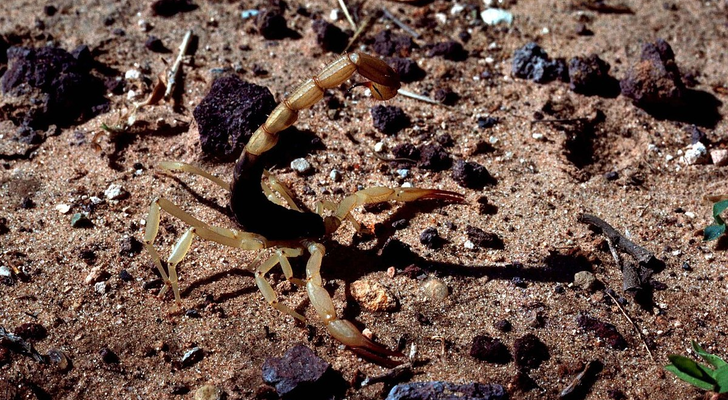
Arizona bark scorpion (Centruroides sculpturatus) on desert gravel
Arizona Bark Scorpion
Centruroides sculpturatus
Pale straw to light tan, 2 to 3 inches long, with slim pincers and a narrow tail. As the one scorpion of medical concern in Arizona, it is the focus of our bark scorpion control in Peoria. A strong climber, active at night and hidden in crevices by day.
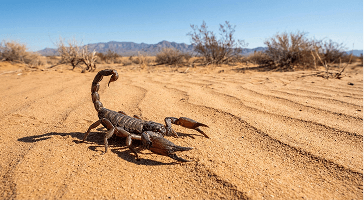
A scorpion on open desert sand
Giant Desert Hairy Scorpion
Hadrurus arizonensis
North America’s largest scorpion, reaching up to 6 inches. Yellowish brown with a darker back. It lives in desert burrows and is seldom found inside homes.
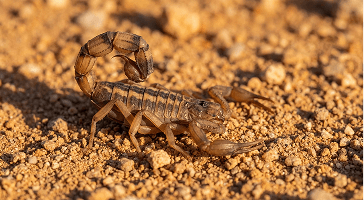
Close-up of a stripe-tailed scorpion on desert sand
Stripe-Tailed Scorpion
Hoffmannius spinigerus
Mid-sized and stocky at 2 to 3 inches, with a striped tail. Ground dwelling, often seen in yards and open desert.

Family owned since 1986. No contracts required.

Simple Steps to Keep Scorpions Out

These habits help cut down scorpion activity between our visits.
City Wide Pest Control brand-green shield with checkmark prevention icon

Seal foundation cracks, gaps and expansion joints, because a bark scorpion can fit through a space as thin as a credit card

City Wide Pest Control brand-green shield with checkmark prevention icon

Fit door sweeps on every exterior door, garage doors especially

City Wide Pest Control brand-green shield with checkmark prevention icon

Close off the open tops of block walls

City Wide Pest Control brand-green shield with checkmark prevention icon

Keep mulch, yard debris and woodpiles away from the foundation

City Wide Pest Control brand-green shield with checkmark prevention icon

Dim outdoor lights that draw in the insects scorpions eat

City Wide Pest Control brand-green shield with checkmark prevention icon

Trim grass and shrubs back from the house walls

Why Choose City Wide Pest Control

Family owned since 1986

over 40 years protecting West Valley desert communities

No contracts

for residential, stay because it works

State-licensed staff

technicians AND office personnel licensed by the Arizona Department of Agriculture

Government-trusted

contracts with State, County, and City buildings, along with several school districts

Green, kid friendly, pet friendly

IPM approach suited to desert environments

Real people

call (602) 944-0099, talk to an account manager, not a robo machine

City Wide Pest Control technician showing a Phoenix family where he will treat their backyard

Let's Solve Your Pest Problem the Right Way

Ready to get ahead of scorpions? Call City Wide Pest Control at (602) 944-0099. We are locally owned and operated, we do not ask residential customers to sign contracts, and same-day service is available.

Frequently Asked Questions

Why do homes in Peoria get bark scorpions?
Watered landscaping is a big draw. UA Extension says homes and buildings with irrigated landscapes can support bark scorpion populations much higher than desert wild-land areas, and the scorpions feed on crickets and cockroaches. Single-family detached homes make up about 74.3 percent of Peoria’s housing units, so there are many yards where this can apply.
UA Extension says Arizona bark scorpions are active most of the year in low desert areas, with nighttime temperatures above 70 F ideal. They are less active from November to March. Because activity can pick up again as nights warm, steady prevention and regular service through the year works better than waiting for a sighting.
Yes. We serve Peoria homeowners, including those in Vistancia and near Lake Pleasant. Call (602) 944-0099 and we will confirm your address and set up a visit. Same-day service is available Monday to Saturday, 8 to 5, and residential service never requires a contract.
The Arizona bark scorpion is pale straw to light tan, about 2 to 3 inches long, with slim pincers and a narrow tail. It is the one scorpion of medical concern in Arizona. It is nocturnal, so you are most likely to notice it after dark or find it sheltering in cracks.
Strictly speaking, scorpions are venomous rather than poisonous. The tan or straw colored one in Arizona is usually the bark scorpion, the species of medical concern here. Its sting is painful and can cause numbness or tingling. Color alone is not proof, so if someone is stung, contact a medical professional.
Bark scorpions can. They climb rough surfaces such as stucco and block walls. UA Extension reports that in research studies 95 percent preferred hollow block walls as refuge, which is why wall caps, gaps and nearby landscaping get close attention during an inspection. Sealing and trimming help between visits.

Scorpion Control Near Peoria

Visit the Peoria hub, our main Scorpion Control page, or a nearby city we serve.