
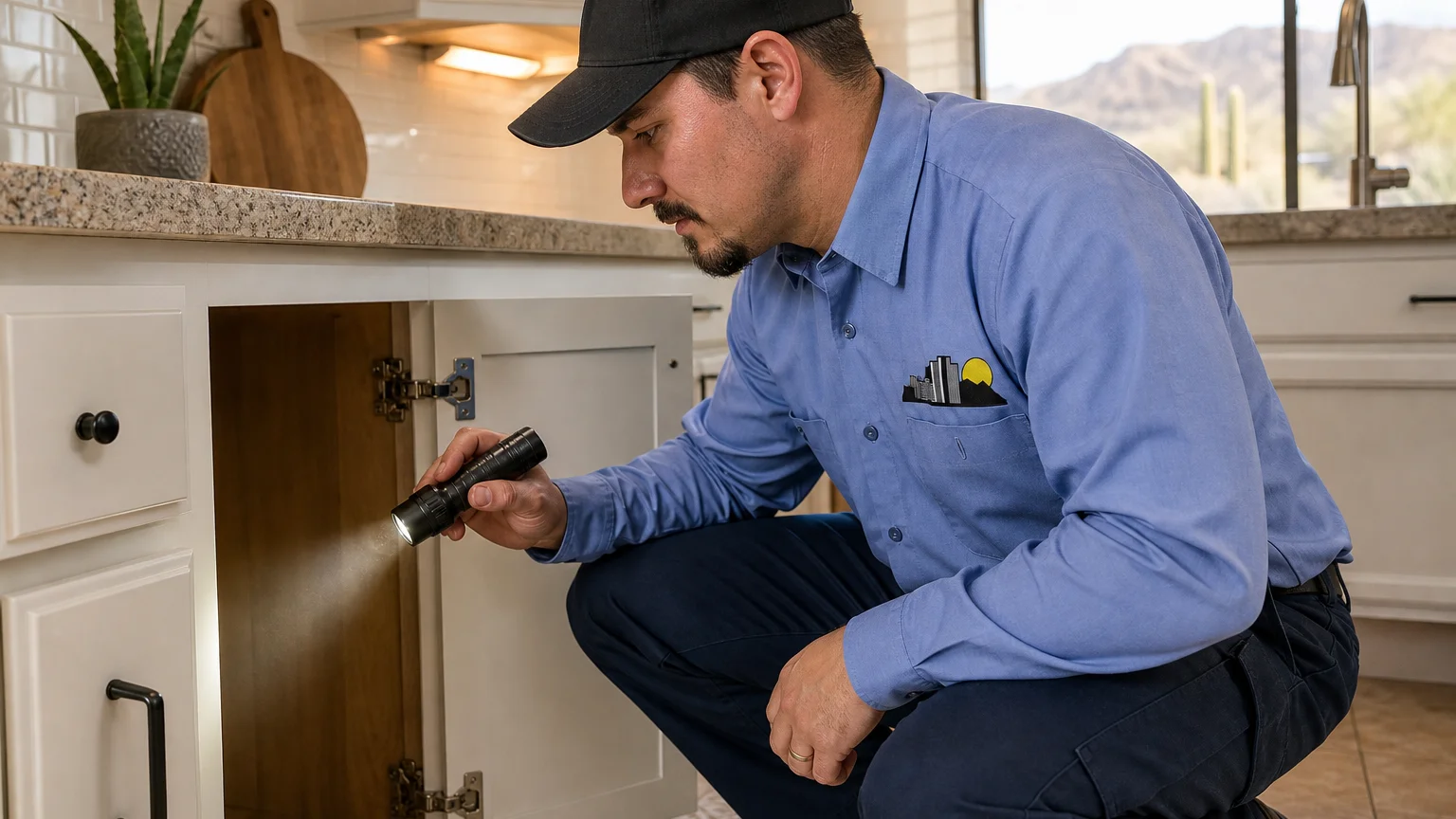
Roach droppings look like coarse black pepper or coffee grounds when they come from German cockroaches, and like dark brown to black ridged cylinders about the size of a grain of rice when they come from American cockroaches. Finding either in a drawer corner, under the sink, or inside cabinets is the earliest reliable sign of a roach problem, usually appearing well before you see a live roach, and it is exactly the evidence a roach control technician looks for first.
What Do Cockroach Droppings Actually Look Like?
Roach poop, roach droppings, cockroach feces: different names for the same evidence. What it looks like depends on which of Phoenix's two common roaches left it, because the two species differ enough in size that their droppings barely resemble each other.
German cockroach droppings are tiny dark specks, most often compared to coarsely ground black pepper or spilled coffee grounds. Individually they are smaller than a millimeter, so what you usually notice is the accumulation: a scattered dusting of dark grit in a drawer corner, along a cabinet hinge, or under the silverware tray. Because German cockroaches (Blattella germanica) live close to food and water, their droppings concentrate in kitchens and bathrooms.
American roach droppings are a different story. American cockroaches are Phoenix's big reddish-brown "sewer roaches," and their droppings are large enough to be mistaken for mouse droppings: dark brown to black cylinders, blunt on the ends, a few millimeters long. The giveaway is texture. American cockroach (Periplaneta americana) droppings have lengthwise ridges running down the sides, while mouse droppings are smooth, taper to a point on at least one end, and often carry tiny hairs.
That mouse mix-up matters, because the response to rodents is completely different from the response to roaches. Before assuming either, look closely at a few pieces:
| Feature | German Cockroach Droppings | American Cockroach Droppings | Mouse Droppings |
|---|---|---|---|
| Size | Under 1 mm specks | 2 to 4 mm cylinders | 3 to 6 mm pellets |
| Shape | Irregular grit, like ground pepper | Blunt-ended cylinders | Pointed on one or both ends |
| Color | Dark brown to black | Dark brown to black | Black to dark brown |
| Texture | Too small to see detail | Ridges running lengthwise | Smooth, sometimes with fine hairs |
| Where you find them | Drawer corners, cabinet hinges, near food and water | Garages, drains, water heater closets, crawl spaces | Along walls, behind appliances, in pantries |
A magnifying glass or a zoomed-in phone photo settles it in seconds: ridges mean roach, points and hairs mean mouse. If you are still not sure, save the photo. It is genuinely useful to a technician before an inspection.
Smear Marks: The Sign Most Homeowners Miss
Where moisture is present, roaches leave a second kind of evidence. Instead of dry droppings, they produce dark, irregular smear marks, greasy-looking streaks and dots wiped along the surfaces they travel at night. Common spots include the junction where a countertop backsplash meets the wall, the inside lip of an under-sink cabinet, and the path along a water line or drain pipe.
Smear marks read as grime, which is why they get cleaned off without a second thought and the clue gets lost. A dark streak that keeps reappearing in the same protected corner, especially near water, is not ordinary kitchen dirt. It is a trail marker on a route roaches are using over and over, and it tells a technician where activity concentrates just as clearly as droppings do.
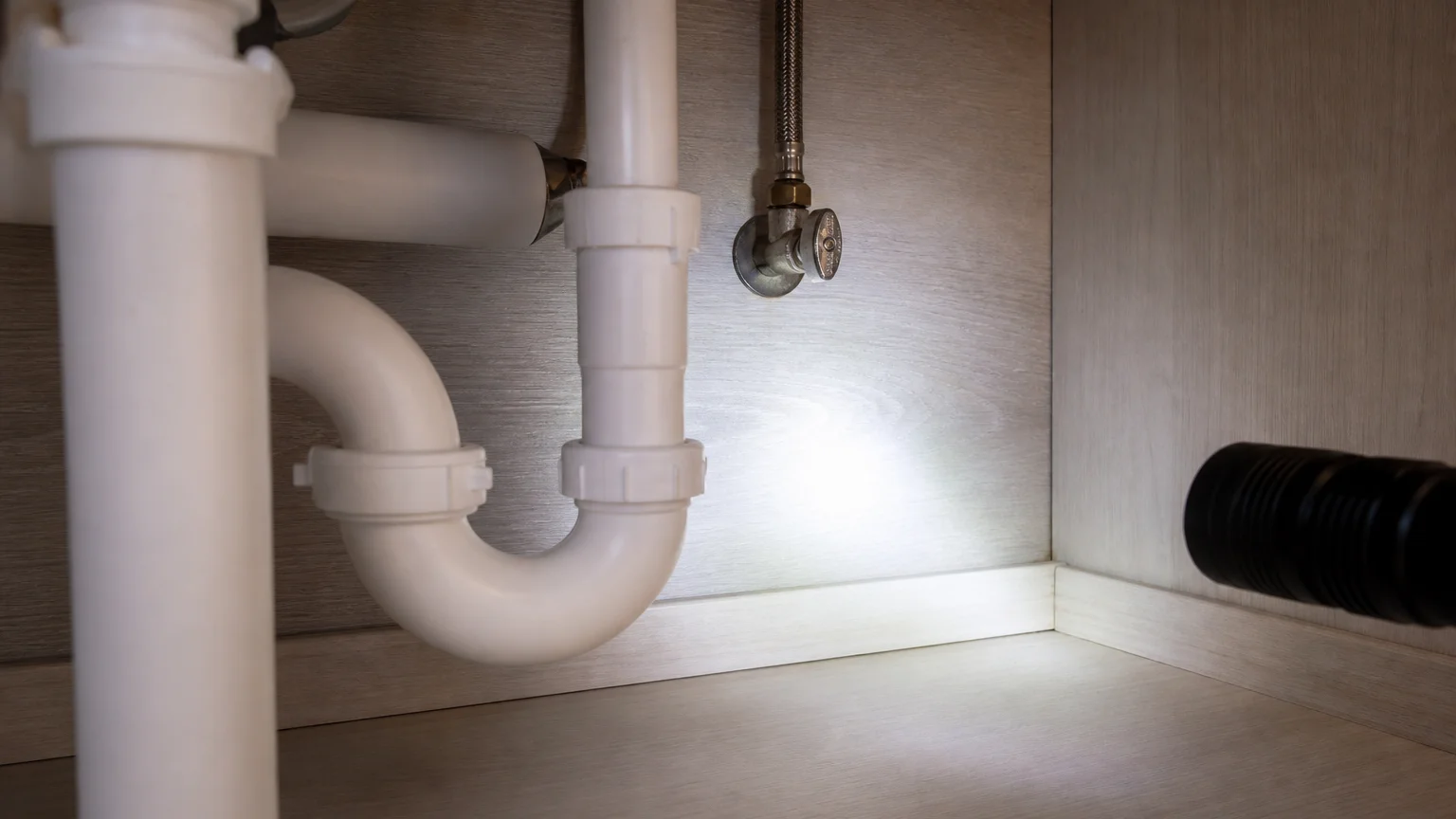
The Monthly Five-Minute Check for Phoenix Homes
Droppings appear before roaches do because roaches are nocturnal and hide in cracks during the day, while their droppings sit out in the open around the clock. A quick flashlight pass through the right spots once a month catches an infestation at the stage where it is still easy to eliminate.
Under the kitchen sink
Sweep a flashlight along the back corners, the pipe openings where plumbing enters the wall, and the cabinet floor edges. This is the single highest-traffic roach area in most homes because it offers water, darkness, and cover in one spot.
Drawer corners and cabinet hinges
Pull the bottom drawers all the way out and check the corners and the cavity underneath. German cockroach droppings collect in exactly these protected angles, looking like a pinch of pepper someone spilled.
Behind and under appliances
Check behind the refrigerator, under the dishwasher kick plate, and around the stove. Warm motors and food debris make these the second stop after the sink.
Garage, water heater closet, and floor drains
In Phoenix these are American cockroach territory, especially during monsoon season when sewer roaches move indoors. Look for the larger ridged droppings along walls and near any drain.
The bottom line: droppings you can wipe away and forget were left by roaches that are still there. The droppings are not the problem. They are the earliest, cheapest warning you will get that a population is establishing itself, and acting on them early is what keeps a few roaches from becoming an infestation.
How to Clean Up Roach Droppings Safely
Cockroach droppings are not just unpleasant. Their feces, shed skins, and saliva contain proteins that are a well-documented asthma and allergy trigger, particularly for children, which is why health agencies treat cockroach debris in kitchens as an indoor air quality issue and not just a cosmetic one.
Cleanup is straightforward with a little care. Wear gloves. Vacuum the droppings first, ideally with a HEPA-filter vacuum so the allergen particles end up in the canister instead of the exhaust air, then wipe the area with warm soapy water or a household disinfectant. Skip dry sweeping, which flicks the particles airborne. Empty the vacuum outside into a sealed bag when you finish.
There is a second reason to clean thoroughly, beyond health: a clean surface resets your monitoring. When every old dropping is gone, anything you find on next month's check is new, and new droppings mean current activity, not history.
Found droppings and want a straight answer?
Send us a photo or book an inspection. City Wide has been reading these exact signs in Valley kitchens for over 40 years, family owned and locally owned the whole way through, and we will tell you honestly what you are looking at.
What Fresh Droppings After Cleanup Mean
If you cleaned a cabinet completely and new droppings appear within a week or two, you have an active population, and the amount tells you something about scale. A few fresh specks point to early activity near that spot. A steady accumulation that returns as fast as you remove it points to an established harborage close by, usually inside a wall void, under an appliance, or in a cabinet cavity you cannot reach with a vacuum and a rag.
This is the point where DIY sprays tend to disappoint. Over-the-counter sprays knock down the roaches you can see, but German cockroaches breed in protected cracks where surface spray never reaches, and spraying can scatter them into new hiding spots. Professional treatment works from the other direction: targeted baits and growth regulators placed where the droppings say the roaches actually live, so the population collapses at the source instead of relocating.
City Wide Pest Control has been family owned and locally owned and operated in Phoenix since 1986, holding Arizona pest control license #2317 and serving all of Maricopa County plus statewide Arizona. Roach calls are among the most common pest control work we do in Valley kitchens, and droppings are almost always how the story starts.
Written by the City Wide Pest Team, City Wide Pest Control, Inc., Phoenix, Arizona. Family owned and locally owned and operated since 1986, Arizona license #2317.
Published: August 2026 | Last Updated: August 2026
Frequently Asked Questions
What do cockroach droppings look like?
German cockroach droppings look like coarse black pepper or coffee grounds scattered in drawer corners and cabinet hinges. American cockroach droppings are larger, dark brown to black cylinders around 2 to 4 mm long with blunt ends and lengthwise ridges, and they show up most often in garages, drains, and water heater closets.
How do I tell roach droppings from mouse droppings?
Look at the ends and the texture. Roach droppings have blunt ends and ridges running down the sides. Mouse droppings are slightly larger, smooth, taper to a point on at least one end, and may have fine hairs in them. A zoomed-in phone photo makes the comparison easy.
Are roach droppings dangerous?
They can affect health indoors. Cockroach droppings and shed skins contain allergen proteins that are a recognized asthma trigger, especially for children in homes with kitchen infestations. That makes prompt cleanup and getting rid of the source worth taking seriously, without being cause for panic.
How should I clean up cockroach droppings?
Wear gloves, vacuum the droppings first (a HEPA filter vacuum is best), then wipe the surface with warm soapy water or a disinfectant. Avoid dry sweeping, which pushes allergen particles into the air. Cleaning thoroughly also means anything you find later is new evidence of current activity.
Do roach droppings always mean an infestation?
Droppings mean roaches have been active in that spot, but quantity and freshness tell you how serious it is. A few old specks could be history; fresh droppings reappearing after a complete cleanup mean an active population is living nearby and it is time to treat, before the numbers climb.
Want it handled before it becomes an infestation?
City Wide Pest Control has treated Valley roach problems since 1986. As a locally owned, family operated Arizona company (license #2317), we know exactly where Phoenix roaches hide and how to eliminate them at the source.