
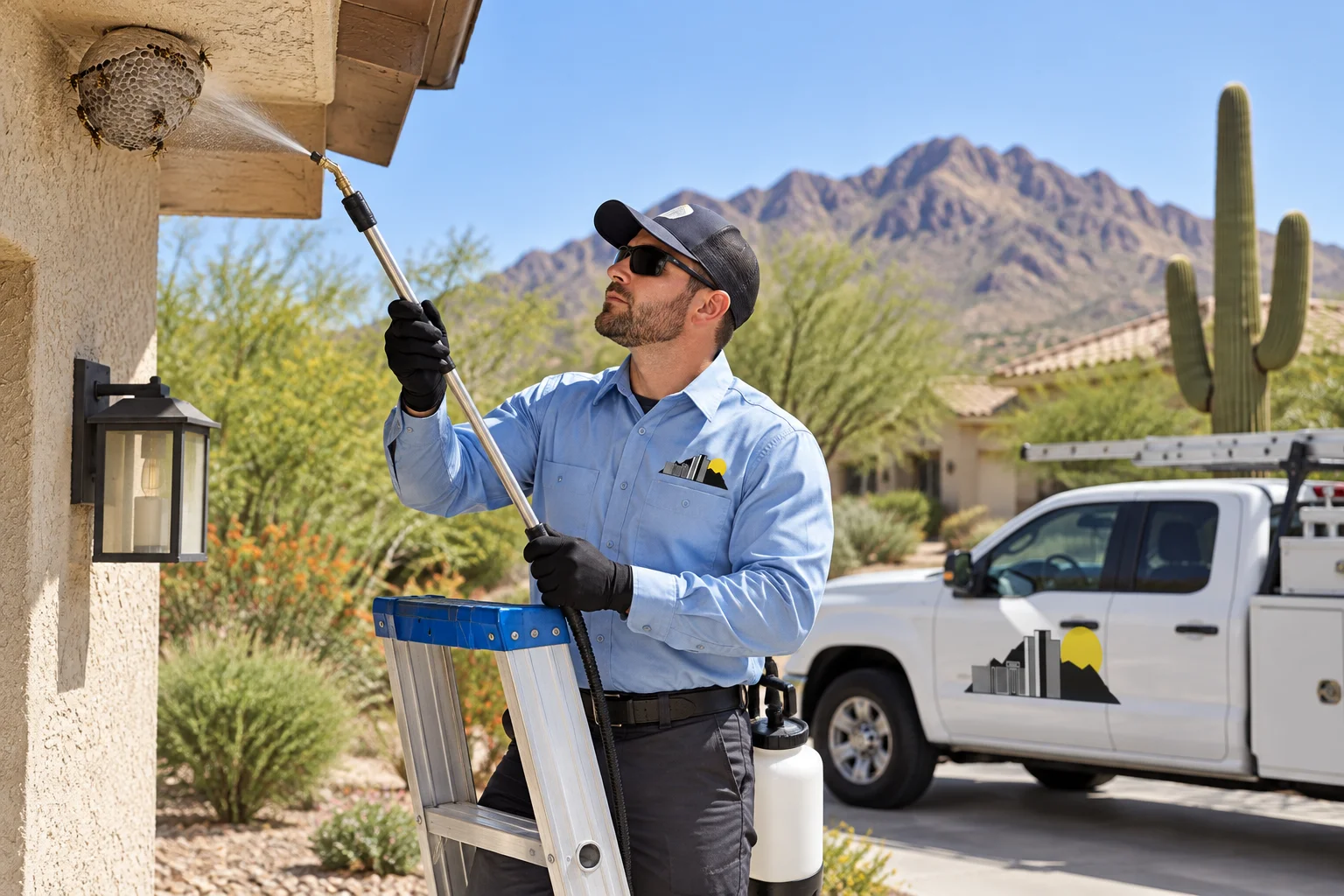
Telling paper wasps vs yellowjackets in Arizona apart matters before you approach a nest: paper wasps build a single exposed comb and rarely attack unprovoked, while yellowjackets nest in hidden underground cavities and sting repeatedly when disturbed. Both are common in Arizona yards from spring through fall, and each calls for a different approach to Residential Bee & Wasp Removal.
By City Wide Pest Team
What Is the Difference Between Paper Wasps and Yellowjackets?
The most reliable way to compare paper wasps vs yellowjackets in Arizona starts with body shape and color. Paper wasps have slender, elongated bodies with long legs that dangle noticeably below them in flight, and their coloring runs from reddish-brown to dark brown with pale yellow markings. Yellowjackets have short, compact bodies with tightly tucked legs in flight and bold, alternating black-and-yellow bands that look almost enameled compared to a paper wasp's duller tones.
Both belong to the same broad group of stinging insects, but they are different species with different social structures. A paper wasp colony usually tops out at a few dozen individuals, while a yellowjacket colony can grow into the hundreds by late summer.
Do Paper Wasps and Yellowjackets Look Alike?
At a glance, yes, and that is exactly why so many Arizona homeowners misidentify one for the other. Both are yellow-and-brown flying insects roughly three-quarters of an inch long. The giveaway is flight posture: a paper wasp's long legs hang down mid-flight like a small trailing undercarriage, while a yellowjacket flies with a tighter, more compact profile and quicker, more erratic movement between food sources.
How Can You Tell a Paper Wasp Nest From a Yellowjacket Nest?
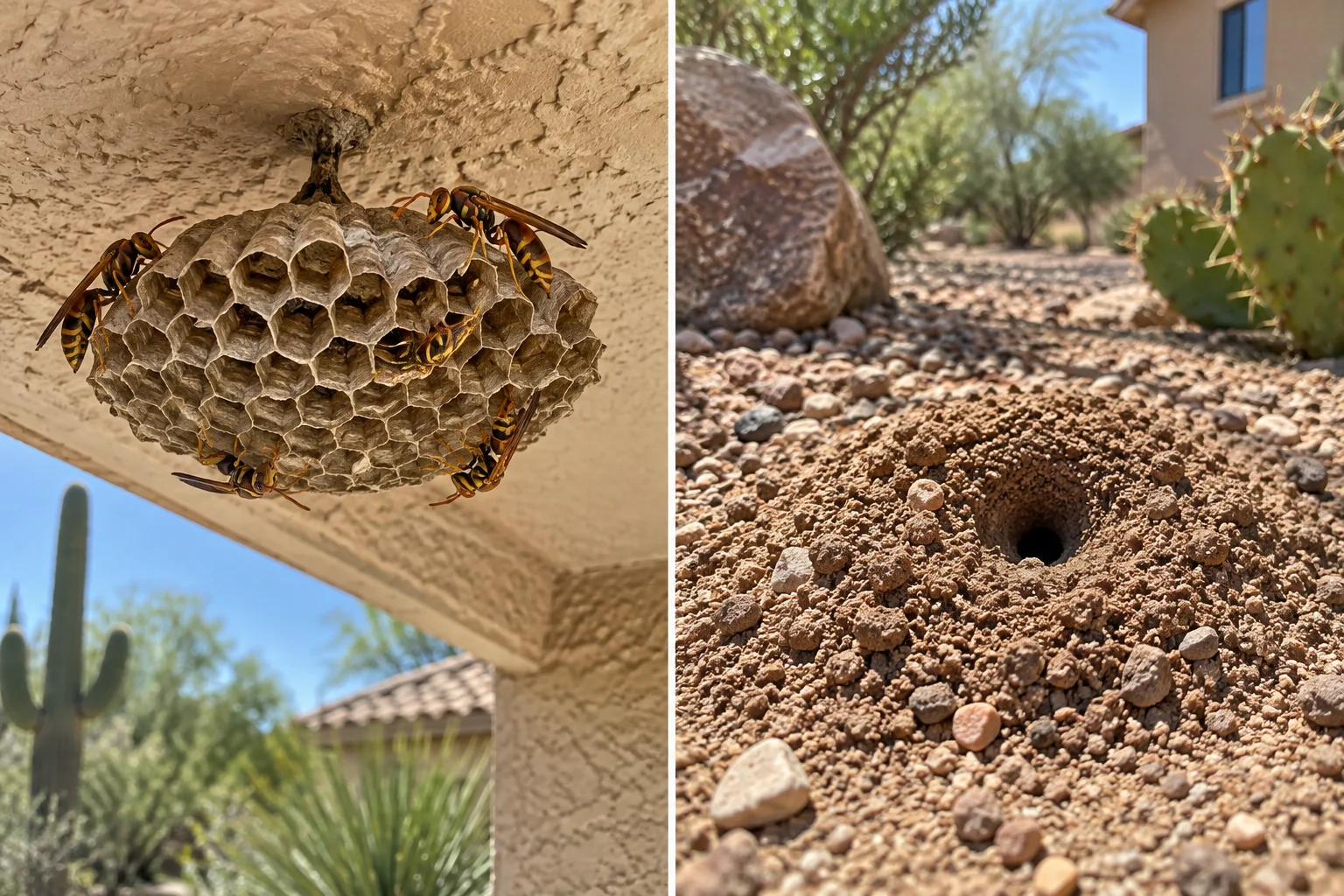
A paper wasp nest is an open, umbrella-shaped comb with visible hexagonal cells and no outer covering, usually no bigger than a small saucer. You can see individual wasps tending larvae right on the surface. A yellowjacket nest is typically enclosed in a papery gray envelope when built above ground, or completely hidden when built underground or inside a wall void, with only a small entrance hole visible from outside.
Where Do Paper Wasps and Yellowjackets Build Nests in Arizona?
Paper wasps favor sheltered, elevated spots: eaves, patio covers, porch ceilings, playground equipment, and the underside of palm fronds are all common in Phoenix-area yards, since each site offers overhead protection from sun and wind while keeping the open comb within easy reach of the queen and her workers. Yellowjackets take the opposite approach in Arizona's soil, often nesting underground in abandoned rodent burrows, inside retaining wall gaps, or behind stucco weep holes. Commercial properties with landscaped courtyards, loading docks, and irrigation boxes see both types, which is why a Commercial Bee & Wasp Removal inspection usually checks structural gaps as carefully as the visible eaves.
Which Is More Aggressive, Paper Wasps or Yellowjackets?
Paper wasps are generally the calmer of the two species. They will sting to defend a nest that is being directly disturbed, but they rarely chase and mostly ignore people who keep their distance. Yellowjackets are more aggressive by nature, especially once a colony reaches full size in late summer. They scavenge aggressively at trash cans, picnic tables, and pet food dishes, will chase a person who swats at them, and defend a nest entrance as a group rather than a single insect. This colony-wide defense response is the main reason yellowjacket encounters tend to produce more stings per incident than a paper wasp encounter, even though an individual paper wasp is just as capable of stinging when handled directly.
Is a Paper Wasp Sting or a Yellowjacket Sting More Dangerous?
Neither species carries more potent venom than the other, and neither has a barbed stinger, so both can sting repeatedly in a single encounter. The real danger comes from an allergic reaction or from disturbing a large colony and taking multiple stings at once, which is more likely with a hidden underground yellowjacket nest than with a single visible paper wasp comb. The Mayo Clinic notes that repeated stings or a known insect-sting allergy both raise the risk of a serious reaction and warrant medical attention.
What Time of Year Are Paper Wasps and Yellowjackets Most Active in Arizona?
Both species follow a similar seasonal pattern in Arizona, just on different timelines. A single fertilized queen starts a nest alone in spring, and the colony grows through the summer as she produces workers. Activity for both peaks in late summer, when colonies are at their largest and workers are out searching for protein and sugar to feed a new batch of queens before winter. Once nighttime temperatures drop in late fall, worker wasps die off, and only newly mated queens survive to overwinter and start next year's colonies.
What Attracts Paper Wasps and Yellowjackets to Arizona Yards?
Food and water top the list in desert heat. Sugary drinks, exposed trash, pet food left outside, and standing water near pools or misters draw both species in. Paper wasps are also drawn to yards with garden pests, since they hunt caterpillars and other soft-bodied insects to feed their larvae, which means a wasp nest sometimes shows up as an unexpected side effect of a productive vegetable garden.
When Should You Call Pest Control for Paper Wasps vs Yellowjackets in Arizona?
Call a professional when a nest sits near a doorway, walkway, mailbox, or play area, when you find more than one active nest on the property, or when anyone in the household has a known sting allergy. A commercial property with regular foot traffic from customers or employees carries the same urgency, since a single stinging incident on-site can turn into a liability issue well beyond the cost of a treatment. An underground yellowjacket nest that has already been disturbed by mowing or foot traffic is also a call-now situation, since the colony is already agitated. City Wide Pest Control has handled these calls across Maricopa County for over 40 years as a family-owned, locally operated company, and knowing the species before a technician arrives helps determine the right approach.
Is It Safe to Remove a Nest Yourself?
Usually not, and underground yellowjacket nests are the riskiest type to attempt alone. Disturbing the entrance can trigger a mass response from dozens of defenders at once, and store-bought sprays rarely reach every wasp inside a hidden cavity. Elevated paper wasp nests carry their own risk from working on a ladder while reacting to stinging insects. A trained technician uses the right protective equipment and application method for the specific nest type, which is safer for the property and for anyone nearby.
Frequently Asked Questions
Can paper wasps and yellowjackets sting more than once? Yes. Unlike honey bees, neither paper wasps nor yellowjackets have a barbed stinger that pulls free after use, so both species can sting repeatedly in the same encounter. This is one reason a disturbed nest, especially a large yellowjacket colony, can result in several stings to one person in a short amount of time.
Are yellowjackets or paper wasps more common in Arizona? Both are common across Maricopa County and statewide Arizona, but paper wasps tend to be more visible around homes because their open nests sit on eaves and patio covers where people notice them quickly. Yellowjacket nests are just as prevalent but often go unnoticed until the colony is disturbed, since many are underground or tucked inside a structural gap.
Do paper wasps or yellowjackets reuse the same nest each year? No. When comparing paper wasps vs yellowjackets in Arizona, both species abandon their nest for good once the colony dies off in fall or winter. Only mated queens survive the cold season, and each one starts a brand-new nest the following spring, so an empty nest left over the winter will not be reoccupied.
Is the best time to treat a paper wasp or yellowjacket nest during the day or at night? Most wasps and yellowjackets are inside the nest and less active after dark, which is why professional treatments are usually scheduled for early morning or evening. Daytime treatment is possible but riskier, since more workers are out foraging and can return mid-treatment, which is one reason this work is better left to a trained technician.
Get a Professional Read on Your Arizona Wasp Nest
If you have spotted a nest at your Maricopa County home or business and are not sure whether it is paper wasps or yellowjackets, a City Wide Pest Control technician can identify the species and nest type on-site and walk you through safe removal. Contact Us to get a nest inspection scheduled before the colony grows any larger.