Mesa's Unique Pest Challenges
Mesa’s historic irrigation canal system, a remnant of the city’s agricultural past, creates moisture corridors through residential neighborhoods that attract cockroaches, mosquitoes, and rodents. Homes in neighborhoods along the canal system near Alma School, Country Club, and Dobson experience heavier pest pressure than properties without irrigation influence. Flood-irrigated lots, while increasingly rare, still exist and create prime conditions for subterranean termites and moisture-seeking pests.
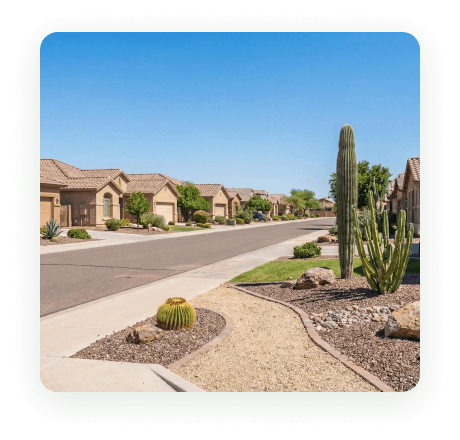
The city’s age diversity amplifies the challenge. Older Mesa homes from the 1950s through 1970s, common in the Original Townsite, Lehi, and neighborhoods along Main Street, were built before modern termite pretreats were standard. These homes have decades of subterranean termite exposure. Many have original plumbing with gaps that allow sewer roach entry. Newer developments along the Superstition Freeway corridor, around the Eastmark community, and in southeast Mesa border desert and agricultural land where scorpions, pack rats, and bees migrate into residential areas.
The Superstition Freeway (US 60) corridor acts as a dividing line between established Mesa neighborhoods and the desert edge. Properties south and east of the freeway face more intense scorpion and wildlife-related pest pressure, while properties north and west deal more heavily with roaches, termites, and urban pest populations.