
Pigeons keep coming back because a roosting spot and a nesting site are two different problems with two different fixes, and most Phoenix homes have both. Understanding why do pigeons keep coming back, plus knowing the difference between roosting and nesting, is the first step toward lasting Residential Pigeon Control results instead of a repeat problem.
By City Wide Pest Team
What Is the Difference Between Pigeon Roosting and Nesting?
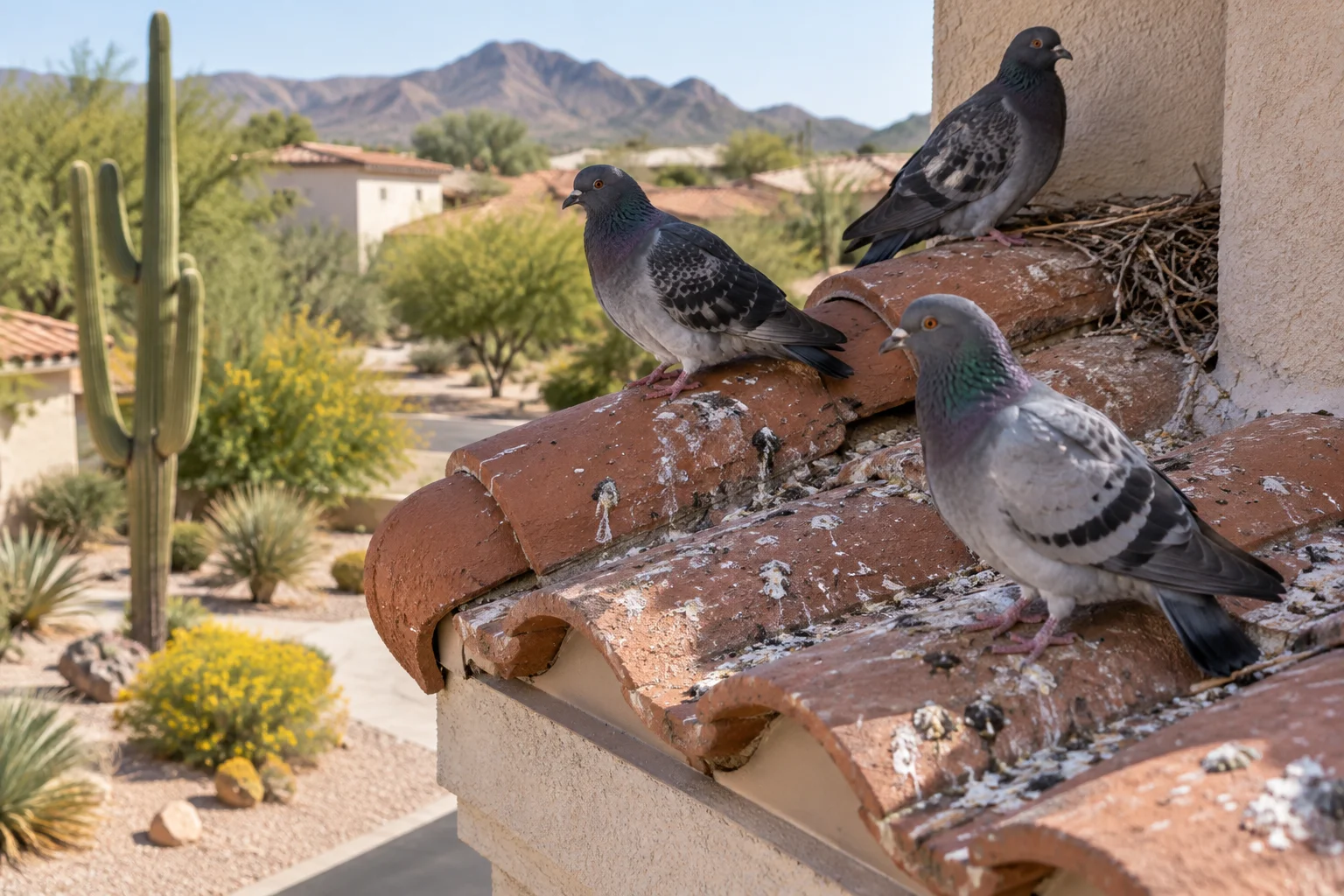
Roosting is simple: a pigeon lands on a ledge, eave, or balcony rail to rest, sleep, or wait out the heat, and moves on without building anything. Roosting spots build up droppings over weeks because the same birds return to the same open perch night after night, but there is no nest material and no eggs sitting there.
Nesting is a bigger commitment. A pair gathers twigs, dried grass, and debris into a loose platform tucked into a corner, vent, or overhang, then lays eggs and raises young there for weeks at a time. A nest means the birds have decided your property is home, not just a rest stop, and it takes more than a broom to clear it out for good.
Why Do Pigeons Keep Coming Back to the Same Spot?
Pigeons are creatures of habit. Once a ledge, roofline, or balcony proves it has shelter from weather, safety from predators, and food sources nearby, that location gets locked in as a reliable spot the flock returns to on a loop. A ledge already marked with droppings actually signals safety to other pigeons passing through, which is part of why one roosting problem tends to grow into a bigger one over a single season.
How Do Pigeons Find Their Way Back Home?
Pigeons navigate using a mix of visual landmarks, the position of the sun, and a sensitivity to the earth's magnetic field, an ability well documented in racing pigeon research. Feral pigeons around Phoenix properties use the same instincts on a smaller scale: once a bird has mapped your roofline as a known perch, it will keep finding its way back to that exact ledge even after being scared off, sometimes returning to the same six inches of railing every evening.
Signs Pigeons Are Nesting vs. Just Roosting on Your Property
A heavy buildup of droppings with no nest material usually means roosting only, a flock is using the ledge as a rest stop but hasn't settled in. Look for these signs to tell the difference:
- Roosting only: Droppings accumulate on a flat ledge, rail, or roofline with no other material present.
- Active nesting: Twigs, dried grass, or debris are packed into a corner, vent, or overhang.
- Nesting confirmed: Eggs, chicks, or persistent cooing and courtship behavior near the nest site.
- Fresh vs. old droppings: Wet, fresh droppings mean pigeons are currently using the spot; dry, chalky buildup can be from birds that have already moved on.
Commercial properties in particular tend to find several nests spread across rooftop HVAC units, signage, and parking structure ledges once someone finally checks, since a single loading dock overhang can host more than one pair at a time.
Why Won't Pigeons Leave My Roof, Balcony, or Ledge?
Pigeons stay where three things line up: food, water, and shelter. Bird feeders, uncovered trash, pet food left outside, and even crumbs swept off a patio all count as food sources that keep a flock committed to a property. Pool water, AC condensate lines, and irrigated landscaping supply the water. Covered ledges, roof overhangs, and parapet walls mimic the cliff ledges pigeons nest on in the wild, so a Phoenix roofline with deep eaves and shaded overhangs is close to ideal habitat, especially during the hottest months when open, sun-exposed surfaces are uncomfortable for them.
Commercial buildings and HOA common areas run into the exact same pattern on a larger scale, with rooftop HVAC units, loading dock overhangs, and parking structure ledges all offering the same shelter a home's eaves do, which is why Commercial Pigeon Control calls usually involve several roosting points at once rather than a single ledge.
How Do You Stop Pigeons From Roosting and Nesting for Good?
Once you know the answer to why do pigeons keep coming back, the fix is usually straightforward. A few consistent habits prevent pigeons from settling in the first place and help a property get rid of a roosting problem before it turns into a nesting one. Don't wait until a single pair turns into a full flock, since delayed cleanup just gives more birds a reason to try the same ledge.
- Remove food sources. Cover trash cans, bring pet food inside, and clean up spilled birdseed so the flock has less reason to stay.
- Clean droppings regularly. Old droppings mark a ledge as safe to other pigeons, so a clean surface is less likely to attract a returning flock, and prompt cleanup also helps a property avoid a repeat nesting cycle the following season.
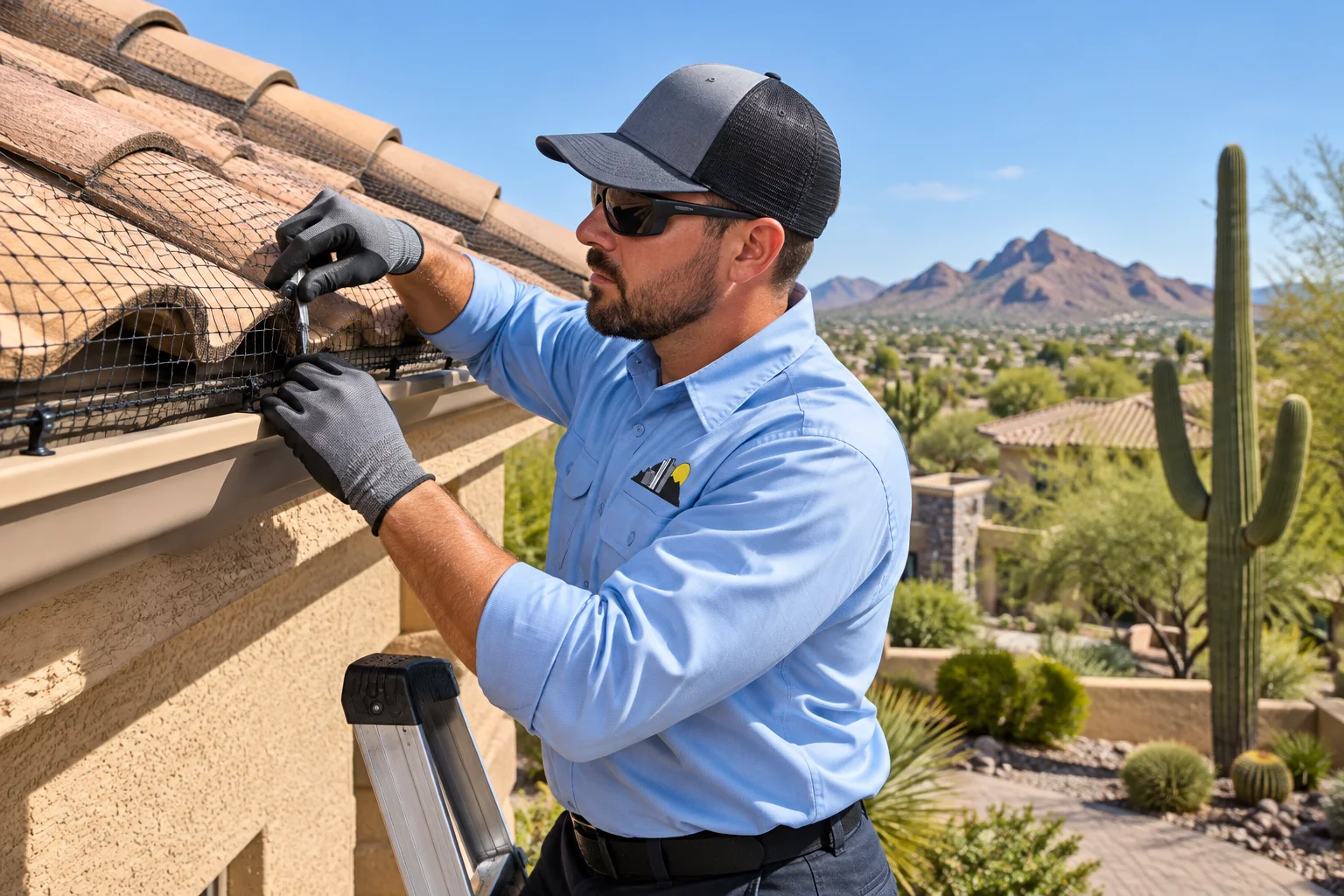
- Block access with bird netting. Netting installed across eaves, overhangs, and open structural gaps physically excludes pigeons from the space rather than just discouraging them.
- Install spikes on flat ledges. Bird spikes remove the flat landing surface pigeons need to perch, which works well on rails, ledges, and signage.
Do Pigeon Spikes and Deterrents Actually Stop Them From Returning?
Bird spikes and bird netting work because they physically remove the option to land or enter, not because they scare pigeons away. Reflective tape, fake owls, and other visual deterrents can help for a short while, but pigeons are smart enough to habituate to a scare tactic that never actually threatens them, and a flock will often return within days once it learns the danger isn't real. Physical exclusion lowers the odds of pigeons returning even after the flock has scattered, and a ledge that's fully blocked won't see them return no matter how strong the habit is. Combining exclusion with cleanup of food sources is the most effective way to keep pigeons away long term, rather than relying on a single reflective gadget and hoping it holds.
Frequently Asked Questions
Do pigeons come back after you remove their nest?
Usually, yes, if the conditions that attracted them in the first place are still there. A pair that has already invested in a nest site will often rebuild in the same spot or a nearby ledge within days unless the property also removes food sources and blocks physical access to the area with netting or spikes.
How long do pigeons roost in the same location?
Pigeons show strong site fidelity and will keep using a favored roost for months or years, often across multiple breeding cycles, as long as shelter and food stay available. A roosting problem left alone tends to grow rather than resolve on its own, since each successful season teaches more birds that the spot is safe.
Is it illegal to remove an active pigeon nest?
Feral pigeons are not native to Arizona and are generally not protected under the federal Migratory Bird Treaty Act the way native species are, but rules can vary by city or HOA, so it's worth confirming local guidance before removing an active nest yourself. A professional evaluation can also help avoid disturbing chicks unnecessarily.
What's the most effective way to keep pigeons from returning to a balcony?
A combination of removing food sources, installing bird netting or spikes on open ledges, and cleaning up droppings promptly tends to outperform any single deterrent. Balconies with furniture, planters, or railings give pigeons extra landing options, so exclusion needs to cover the whole space, not just the main rail, or the birds will simply try the next open surface over.
Get a Pigeon Exclusion Plan for Your Property
City Wide Pest Control has been solving roosting and nesting problems for Phoenix-area homes and businesses for over 40 years as a family-owned, locally operated company, and an on-site inspection can identify exactly which ledges, vents, or overhangs are drawing pigeons back before a plan is built around them. Contact Us to schedule an inspection.