
The early signs of bed bugs are small itchy bite marks in a line or cluster, rust-colored stains on your sheets, and tiny dark droppings along mattress seams. Catching them early, before a full infestation sets in, means a faster Residential Bed Bug Treatment and far fewer bites. Here's exactly what to look for first.
By City Wide Pest Team
What Are the Early Signs of Bed Bugs in a Home?
The first sign of a bed bug infestation is usually a handful of bite marks that show up somewhere you didn't expect, since bed bugs feed at night while you sleep and you rarely feel it happen. Right behind that: a few rust-colored spots on a pillowcase or fitted sheet, tiny dark fecal marks along a mattress seam, and a faint musty, sweetish odor in a bedroom that wasn't there before. None of these signs alone proves you have bed bugs, but two or three together is a strong reason to check further before the population grows. As a locally owned, family-run Phoenix pest control company since 1986, we see the same pattern over and over: homeowners notice the bites weeks before they ever spot a live bug.
What Do Bed Bug Bites Look Like on Skin?
Bed bug bites typically show up as small, raised, red welts with a slightly darker center, often arranged in a line or a tight cluster of three or four, sometimes called a "breakfast, lunch, and dinner" pattern because the bug feeds, moves a short distance, and feeds again. They usually appear on skin that was exposed while you slept: arms, shoulders, neck, and legs. The welts can look a lot like other insect bites, so location and pattern matter as much as the bite itself.
How Can You Tell Bed Bug Bites Apart From Other Bug Bites?
Other insects can leave bites that look like bed bug bites at first glance, but the pattern and location usually give it away. Mosquito bites tend to show up as single, scattered, puffy bumps and usually itch almost immediately. Flea bites cluster around the ankles and lower legs, often with a small red halo. Bed bug bites are more likely to appear in a line or small group on skin left exposed during sleep rather than covered by clothing, and they show up on multiple household members who slept in the same bed, one of the more reliable tells.
Do Bed Bug Bites Itch Right Away or Later?
Usually later. Bed bug saliva contains a mild anesthetic and anticoagulant, so most people don't feel the bite happen, and the itching and swelling often build up over several hours rather than starting right away. Reaction timing and severity vary a lot from person to person, so treat a delayed reaction as normal, not as proof it wasn't a bed bug.
How Long After Bed Bugs Bite Do Symptoms Show Up?
For many people, a visible welt shows up within a day or two. But a first-time reaction can take longer, in some cases up to a couple of weeks, since your immune system may need repeated exposure before it responds visibly. This is part of why some people live with an active infestation for a while before they connect the bites to bed bugs at all.
What Do Bed Bug Stains on Sheets or Mattresses Look Like?
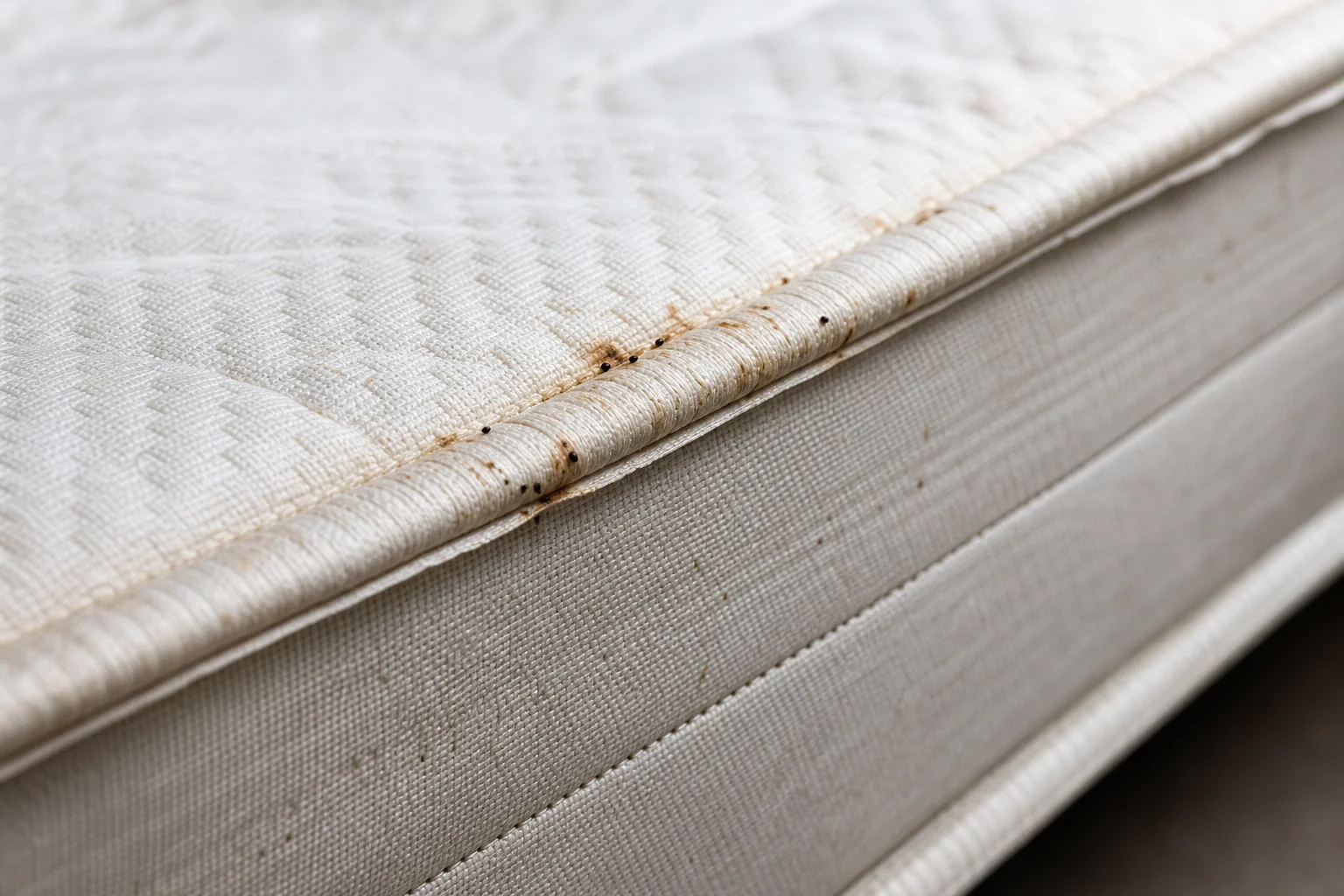
Three marks are worth learning to recognize. Rust or reddish-brown smears are blood from a bug crushed while feeding or resting, usually from rolling over one in your sleep. Small dark spots, almost like a marker dot, that bleed slightly into the fabric when touched with a damp cloth are fecal droppings, and they tend to cluster along seams and piping. Tiny, pale, papery shells are shed skins from young bed bugs molting as they grow, and pearly white specks about the size of a poppy seed tucked into stitching are bed bug eggs. Finding any of these on a mattress or box spring is a stronger, more specific sign than bites alone.
Where Do Bed Bugs Hide First in a House?
Bed bugs hide close to where people sleep and rest, tucked into cracks and crevices too tight for daylight to reach, favoring dark spots within a few feet of the bed. Look first along the mattress seams and piping, the underside and corners of the box spring, the joints and screw holes of the bed frame and headboard, and the seams of a nightstand drawer. As a population grows, they'll spread to baseboard gaps, behind picture frames and outlet covers, and inside upholstered furniture near the bed. Hotel stays and secondhand furniture are common ways bed bugs first enter a Maricopa County home, since they hitchhike in luggage, backpacks, and used furniture rather than flying or jumping in.
How Do You Check a Mattress or Bed Frame for Bed Bugs?
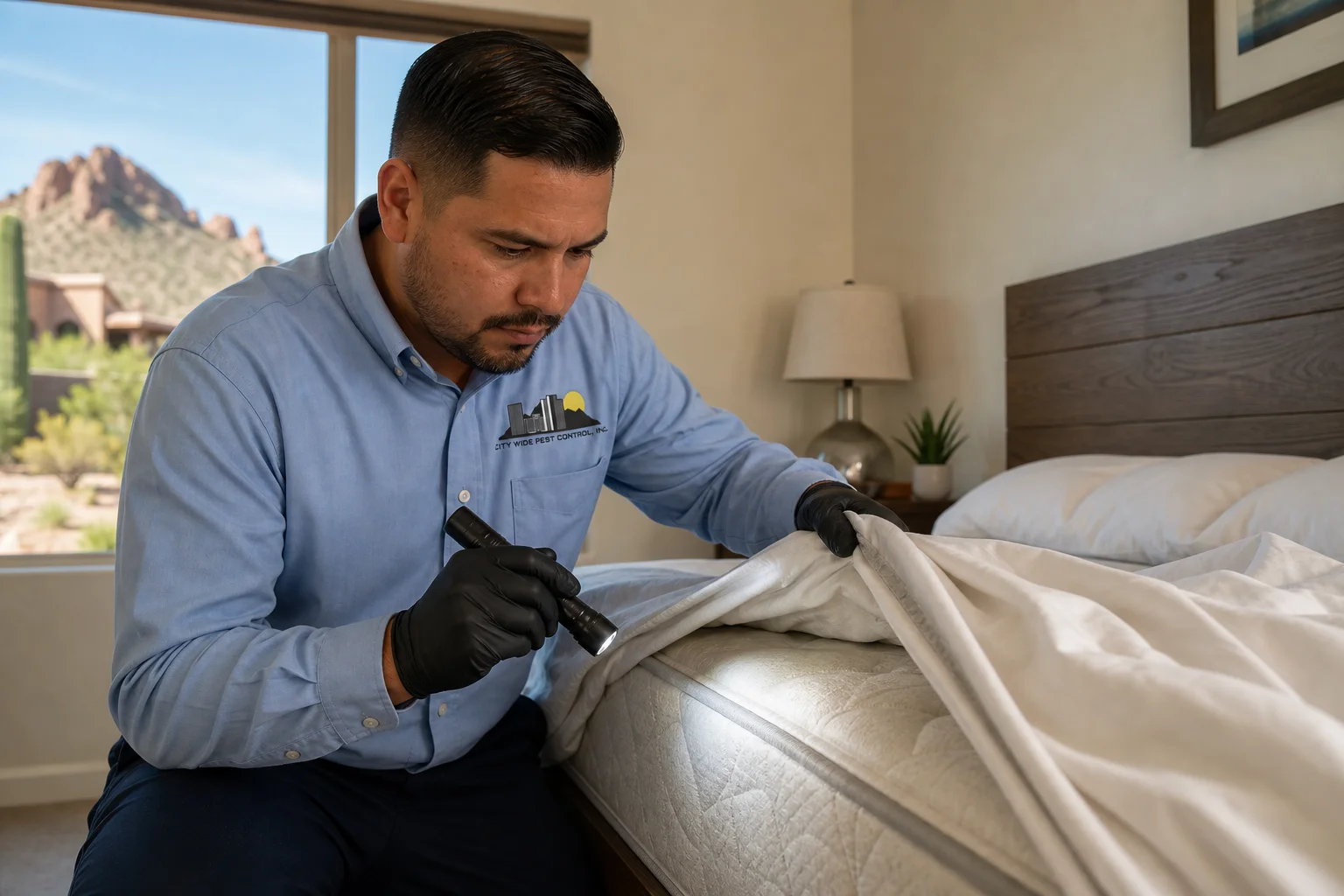
Strip the bed down to the mattress and grab a flashlight. Run the light slowly along every seam, corner, and fold of the mattress, then flip it and check the underside. Check the box spring the same way, including underneath where the fabric is stapled. Slide a credit card or old gift card into the joints and screw holes of the bed frame and headboard, since gaps about the thickness of a credit card are exactly where bed bugs prefer to hide. Pull the nightstand drawers all the way out and check the frame and glue joints. If you find live bugs, shed skins, droppings, or eggs anywhere in that check, treat it as a confirmed early infestation and move straight to professional treatment rather than trying to spot-treat the mattress yourself.
Can You Have Bed Bugs and Not See Any Bites?
Yes. Studies on human reactions to bed bug bites, cited by the CDC, indicate that a meaningful share of people show no visible skin reaction to bites at all, even with repeated exposure. That means you can have an active infestation and never see a single mark on your skin, which is exactly why the stains, shed skins, and hiding spots described above matter as much as bites, sometimes more.
Bed bugs are also nocturnal and stay hidden during the day, so it's entirely possible to have a bed bug problem in a home with no visible bugs at all, at least early on. A light infestation might only produce a handful of droppings and one or two bites a week, which is a good reason to check the mattress and bed frame directly on a regular basis rather than waiting to see one crawl across the sheets.
When Should You Call a Pest Control Professional for Bed Bugs?
Call as soon as you've confirmed two or more of the signs above, rather than waiting to see how bad it gets. Bed bugs reproduce quickly, spread from one room to adjacent rooms and shared walls in multi-unit buildings, and have grown resistant to a lot of over-the-counter sprays, so DIY treatment often knocks back the visible population without reaching eggs and bugs hiding deep in furniture and wall voids. City Wide Pest Control has been treating bed bug infestations across Maricopa County and statewide Arizona for over 40 years as a family owned, locally operated company, and we can inspect a home, confirm what you're dealing with, and lay out a straightforward Residential Pest Control treatment plan before the population spreads past one room.
Frequently Asked Questions
What is the very first sign of a bed bug infestation?
For most homeowners, it's a handful of bite marks in a line or small cluster on skin that was exposed while sleeping. Rust-colored stains or small dark droppings along the mattress seam usually show up around the same time, and finding either one is worth a closer inspection of the bed and frame.
What do bed bug eggs look like?
Bed bug eggs are tiny, pearly white, and about the size of a poppy seed, often laid in small clusters tucked into mattress seams, stitching, or crevices in a bed frame. They're coated in a slightly sticky substance that helps them stay put, and can be hard to spot without a flashlight and a close look.
Can bed bugs be in a home with no visible bugs at all?
Yes. Bed bugs are nocturnal and hide in tight cracks and crevices during the day, so a light or early infestation can exist for weeks with no live bugs visible, only occasional bites, stains, or droppings. That's why checking the mattress and frame directly matters more than waiting to spot a bug.
Is it normal to check for bed bugs and find nothing even with bites?
It happens. A small early infestation may only leave a few droppings or one shed skin, easy to miss on a quick look. If bites keep appearing and a visual check turns up nothing, a professional inspection can check spots a homeowner is likely to miss, like frame joints and outlet covers.
How can I check for bed bugs before calling anyone?
Strip the bed, inspect every seam and fold of the mattress and box spring with a flashlight, and slide a card into the bed frame joints and headboard screw holes. Check nearby baseboards and outlet covers too. Finding live bugs, droppings, shed skins, or eggs at any point confirms the infestation and means it's time for treatment.
Get a Bed Bug Inspection From City Wide Pest Control
If you've spotted any of these early signs of bed bugs in your Maricopa County or Arizona home, don't wait for the population to spread past one room. Contact Us and our team will confirm what's going on and get a treatment plan started.