
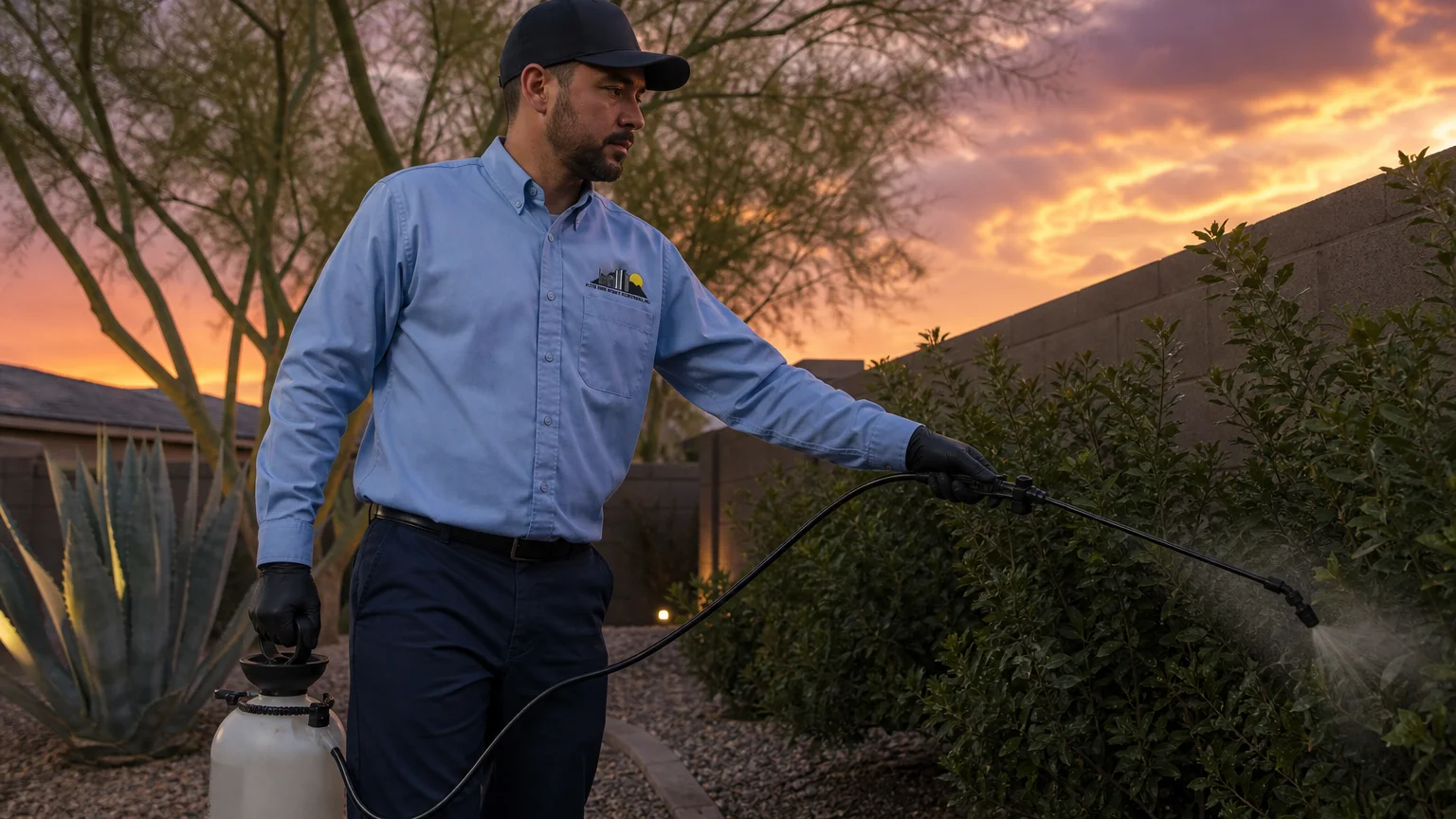
A professional mosquito yard treatment is a barrier spray applied to shaded vegetation, fence lines, and other resting spots that knocks down adult mosquito counts 80 to 90 percent for two to three weeks, not permanently. It kills mosquitoes on contact and keeps repelling new ones from landing on treated leaves, but it does nothing for eggs already sitting in standing water. Here is what a mosquito treatment actually covers, where it runs out of reach, and what pairs with it for real backyard mosquito control.
What Happens During a Barrier Mosquito Treatment
A barrier mosquito treatment is not a quick DIY fog from a hardware-store canister, and it is not the chemicals-heavy blanket spraying some homeowners picture. Professional mosquito treatments start with a licensed technician applying a residual insecticide, typically a pyrethroid based product, directly to the vegetation, mulch beds, block fencing, and shaded ground cover where adult mosquitoes rest during the heat of the day, plus eaves and other harborage spots around the structure. The product bonds to the leaf surface, so it keeps working after it dries instead of washing away with the first sprinkler cycle.
Two things happen from there. Mosquitoes that land on treated foliage in the hours after application die on contact. For weeks afterward, the residue keeps repelling and knocking down any mosquito that touches it, which is the part homeowners actually notice: fewer bites during evening yard time, not zero mosquitoes forever.
Coverage quality matters as much as the product itself. A technician who skips the underside of dense shrubs or the shaded side of a block wall leaves resting spots untouched, and those gaps are usually where the first mosquitoes reappear. Wind, plant density, and how thoroughly the crew walks the property all affect how even and effective the knockdown actually is, which is part of why two treatments with the same label can produce noticeably different results.
City Wide Pest Control has been a family owned, locally owned and operated Phoenix company since 1986, and our technicians walk every property before spraying to map the actual resting sites instead of blanket-treating the whole yard. That inspection step, backed by over 40 years of experience reading Valley properties, is why results vary property to property even with the identical product.
What Realistic Mosquito Control Looks Like After Treatment
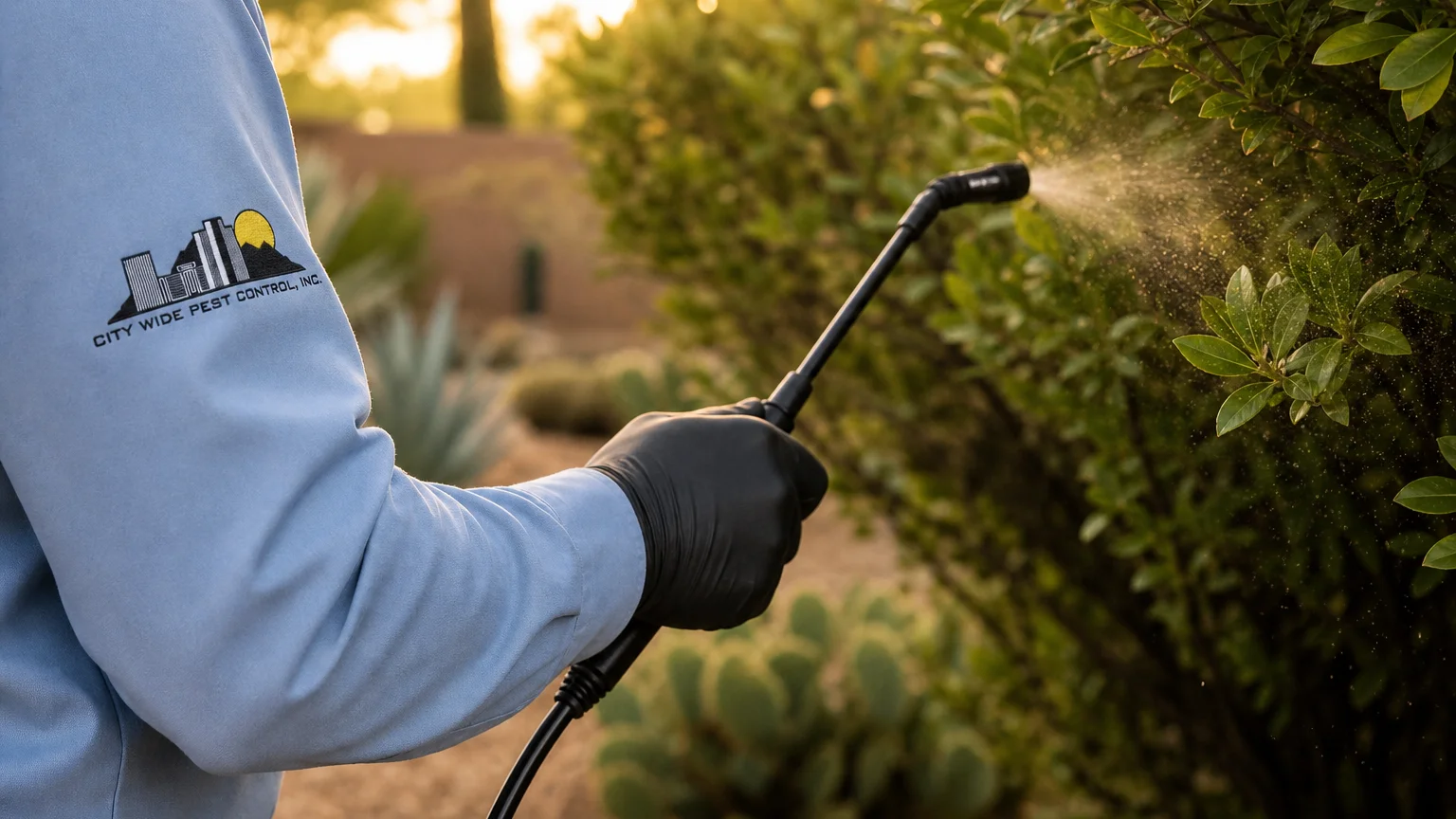
So, do mosquito yard treatments work? Yes, measurably, for a defined window. Independent barrier-spray research on common residential products shows bite reduction in the 80 to 90 percent range for two to six weeks depending on the active ingredient, application coverage, and weather, with effectiveness fading gradually rather than dropping off a cliff on day 22. Rain, dust storms, and irrigation overspray all shorten that window, which is exactly why Phoenix's monsoon season is the hardest stretch of the year to keep a treatment holding.
Part of why the timeline matters so much here: a mosquito can go from egg to biting adult in as little as seven to ten days once summer heat and standing water line up, which is faster than in most of the country. That short life cycle is also why a single missed pocket of water during monsoon season can repopulate a yard well inside a barrier treatment's normal two to three week window.
80 to 90%
typical drop in resting adult mosquito counts on a treated property, lasting two to three weeks per application
That is what effective mosquito treatments deliver: a real, measurable reduction, not a marketing number, and also not eradication. A treated yard during monsoon season should feel like a manageable backyard again, not a mosquito-free bubble.
Where a Yard Treatment Runs Out of Reach
A barrier spray only protects the property it is applied to. It does not treat:
- Standing water anywhere on site. Plant saucers, clogged gutters, tarps, kiddie pools, and birdbaths breed the next generation regardless of how well the vegetation was sprayed.
- A neighboring yard's green pool or forgotten water feature. Mosquitoes fly roughly 100 to 300 feet from where they hatch, so a stagnant pool two doors away can keep reseeding a perfectly treated property.
- Mosquito eggs already laid in water. The product targets adult mosquitoes on contact and residue; it is not a larvicide for standing water.
- Indoor mosquitoes. A yard treatment is an outdoor perimeter service, not pest control for mosquitoes that get inside through a torn screen or an open door.
This is the gap that catches homeowners off guard: the treatment can be applied correctly and still show mosquitoes back within a week if a green pool or a forgotten water trough sits within flight range. It is also why a one time mosquito treatment tends to underperform compared to a recurring professional program timed to monsoon season, since re-application keeps the residual barrier fresh through the exact weeks new water keeps showing up.
Consumer gadgets fill some of the gap between visits, but not all of it. Bug zappers mostly attract and kill non-biting insects drawn to light and do little for outdoor mosquito activity around a patio, since mosquitoes hunt by scent and body heat, not light. Personal mosquito repellents applied to skin or clothing protect the person wearing them, not the yard itself. Both are reasonable stopgaps for a single evening outside. As a rule, bug zappers handle moths, mosquito repellents handle the person wearing them, and neither touches the yard mosquito population itself; that is the job of an outdoor mosquito treatment paired with source reduction.
Pairing Treatment With Source Reduction
Source reduction, removing or treating standing water, is what closes the gap a barrier spray cannot reach on its own. University extension entomologists consistently rank eliminating breeding water as the single most effective step a homeowner can take, ahead of any spray. Before or right after a barrier treatment:
Empty anything that holds water for more than a few days
Plant saucers, buckets, unused pots, and tarps with a low spot all breed mosquitoes in under a week during summer heat.
Clear gutters and check drip irrigation for pooling
Clogged gutters and a leaking emitter create the small, shaded pockets of standing water mosquitoes prefer over open pools.
Deal with a green or neglected pool immediately
A green pool is one of the highest-volume mosquito factories in the Valley. Chemically treat it or have it serviced; a barrier spray on the surrounding yard will not offset it.
Talk to a neighbor about a shared water source
If a bordering property has standing water within flight range, a friendly conversation does more for your bite count than an extra application on your own lawn.
The bottom line: A barrier treatment handles the mosquitoes resting in your landscaping. Source reduction handles the ones being born. The real solution is both; skip either half and the other one is working overtime.
Why Monsoon Season Changes the Math in Phoenix
Arizona's two biting mosquito species behave differently, and both matter here. Culex tarsalis is active from dusk through dawn, breeds in irrigation water and neglected pools, and is the primary carrier of West Nile virus in the Southwest. Aedes aegypti, the smaller "ankle biter," bites during the day, breeds in tiny amounts of water like a bottle cap or a plant saucer, and rarely flies far from where it hatched, which is why a single neglected planter on a patio can produce a daytime mosquito problem that a dusk-focused treatment schedule misses.
Monsoon season is when both species peak across Maricopa County. The same storms that green up desert landscaping also fill every low spot, tarp fold, and clogged drain with the standing water both species need for breeding. Maricopa County Environmental Services runs weekly mosquito trap surveillance across the Valley through the season and tracks West Nile virus activity every year since it first reached Arizona in 2003, which is the practical reason pest control companies push professional mosquito management, treatment scheduling and source reduction together, starting in July rather than waiting for a bite complaint in September.
City Wide has been treating Valley yards through monsoon season since 1986 as a family owned, locally owned and operated company, which matters here specifically because the right mosquito treatment calendar is a Phoenix-specific judgment call. A schedule copied from a mild-climate state under-treats during a Maricopa County monsoon; over-treating outside the wet months wastes a visit on a lawn that was never going to rebound that fast.
| Situation | Barrier Treatment Alone | Barrier Treatment + Source Reduction |
|---|---|---|
| Resting adult mosquitoes in landscaping | Reduced 80 to 90 percent | Reduced 80 to 90 percent |
| New mosquitoes hatching on your property | Not addressed | Addressed at the source |
| Mosquitoes drifting in from a neighbor’s water | Somewhat reduced on landing | Reduced on landing, ongoing conversation helps long term |
| Protection duration | Two to three weeks, then fades | Two to three weeks per application, with fewer new mosquitoes between visits |
Practical Phoenix framing: if the last mosquito treatment was three weeks ago and a monsoon storm rolled through five days ago, expect the mosquito count in the backyard to be climbing back toward pre-treatment levels regardless of how well the original application went. That is normal chemistry, not a failed service call.
Ready for a mosquito treatment built around your property?
A City Wide technician inspects your yard's actual resting and breeding spots before applying anything, so mosquito treatments target where mosquitoes really are as part of a full pest management approach, not just the whole lawn on a fixed schedule. It is not a one-visit quick fix, it is a repeatable solution built around your property.
Frequently Asked Questions
How long does a mosquito yard treatment actually last?
Most mosquito treatments hold for two to three weeks under normal Phoenix conditions, shorter after heavy monsoon rain or dust storms wash and weather the residue off treated foliage faster than dry weeks do.
Does the spray kill mosquito eggs sitting in standing water?
No. Barrier treatments target adult mosquitoes on contact and through the insecticide residue left on vegetation. Eggs and larvae in standing water need the water removed, treated, or dumped, a spray on the surrounding landscaping will not reach them.
Is a mosquito barrier treatment safe for kids and pets once it dries?
Products used in professional mosquito treatments are labeled for use around homes with children and pets once the application has dried, typically within a couple of hours. Ask your technician about product options and the exact re-entry window for what is used on your property; the label lists every active ingredient if specific chemicals are a concern, and lower-impact products exist for environmentally sensitive properties.
Can a neighbor's green pool undo my mosquito treatment?
Yes, within flight range. Culex mosquitoes can travel several hundred feet away from where they hatch, so a stagnant pool or forgotten water feature nearby can keep reseeding a treated yard even when the application itself worked correctly. A quick conversation about dumping or treating that water often does more than an extra application on your own side of the fence.
Why does my yard need more mosquito control right after a monsoon storm?
Storms fill every low spot and clogged drain with fresh standing water at the same time they wash residual treatment off leaves, so a mosquito rebound five to seven days after a storm is common and not a sign the original treatment failed.
City Wide Pest Control has served Maricopa County and Arizona homeowners for over 40 years as a family owned, locally owned and operated company, Arizona license #2317. Content reviewed by the City Wide Pest Team.
Last updated August 20, 2026.